Wrocław is home to members of national and ethnic minorities. They include Ukrainians, Germans, Jews, Belarusians, Karaims, Roma, Armenians, Lemkos and Tatars. The Act on National and Ethnic Minorities and on the Regional Language of 2005 guarantees everyone equal treatment regardless of ethnic origin and regulates matters relating to the preservation and development of identity.
Under the Act, a national or ethnic minority is a group of people who have lived in Poland for at least 100 years and who differ from the majority of society in language, culture, ethnic origin or religion.
Apart from the communities listed in the Act (which have formal status), it is worth noting that members of other nationalities, such as Greeks and Bulgarians, have lived in Wrocław for many years and also have their own community organisations.
National minorities in Poland:
- Belarusian
- Czech
- Lithuanian
- German
- Armenian
- Russian
- Slovak
- Ukrainian
- Jewish
Ethnic minorities in Poland:
- Karaim
- Lemko
- Roma
- Tatar
How many minorities live in Poland? 2021 census results
How many members of national and ethnic minorities live in Wrocław? According to the latest data from the 2021 census, an identification with a national or ethnic group other than Polish was declared nationwide by more than half a million people, but more than 900,000 people reported belonging to another nation or ethnic community.
In Lower Silesia, around 48,000 residents declared a non-Polish identity, most often Ukrainian (almost 10,000 people), German (approx. 9,000), Lemko (5,500) and Silesian (4,000).
However, these figures appear to be underestimated, judging, among other things, by the number of Roma: according to the census, only 1,500 live in Lower Silesia.
It is also worth knowing that members of minorities are not migrants or refugees. In recent years – owing to events first in Belarus and then in Ukraine – Wrocław has become home to many citizens of these very countries, and it is this group that dominates media coverage and public awareness. Many of the newcomers are, moreover, involved in the activities of minority organisations.
About minorities in Wrocław
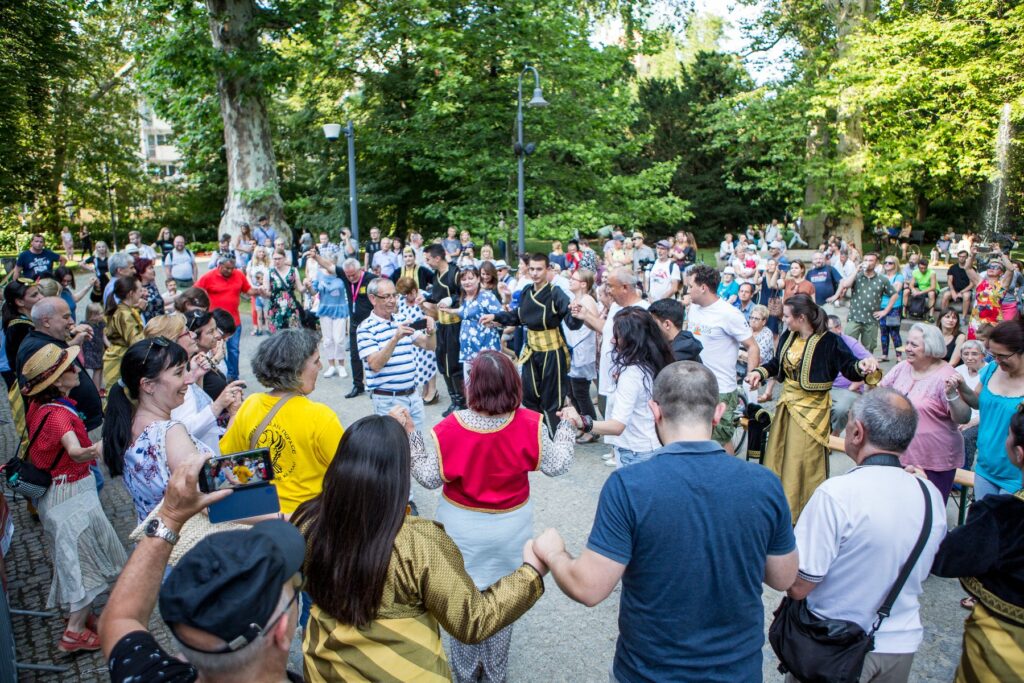
The main activities of national and ethnic minority organisations are language teaching and organising events that sustain and showcase the culture and identity of their group. It is worth noting that how active a community is depends not only on its size, but also on committed and charismatic leaders.
Cooperation between Wrocław’s minorities dates back to the mid-1990s, when, on the initiative of Christian clergy (Catholic, Orthodox and Protestant) and a Jewish community activist, the District of Mutual Respect – the Four Denominations District came into being. It is home to a Catholic church, a Lutheran church, an Orthodox church and a synagogue. The District symbolises Wrocław’s religious and cultural diversity and tolerance.
The first Wrocław Kutia, still held today, also dates back to that time. It is a Christmas Eve gathering of Wrocław’s national and ethnic minorities, organised by the Wrocław branch of the Union of Ukrainians in Poland. It is an opportunity not only to present one’s culture and cuisine, but above all to come together.
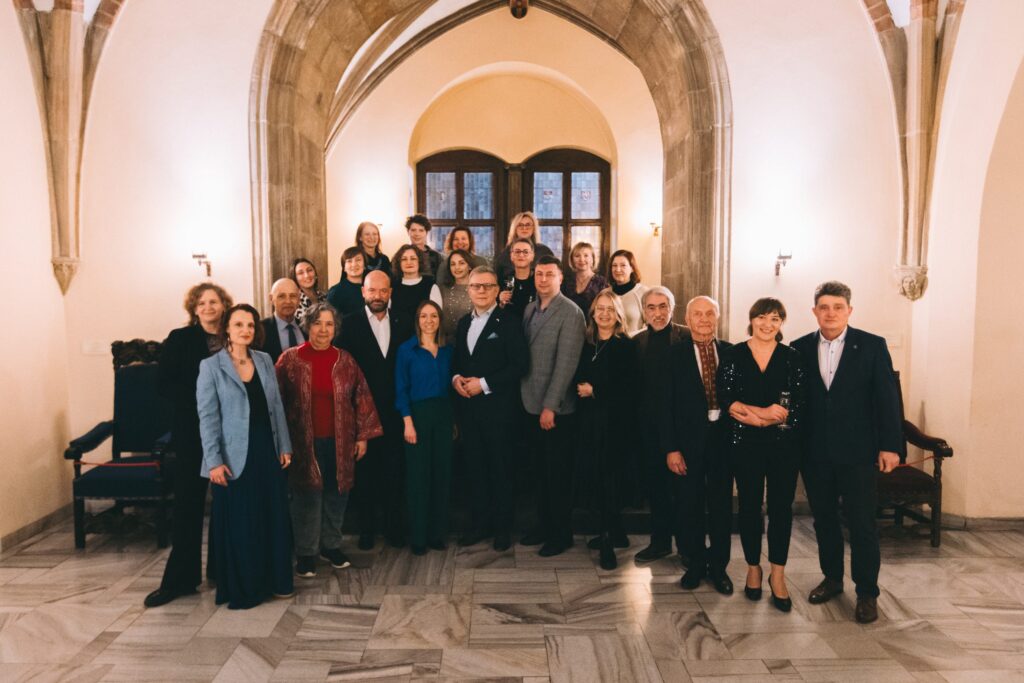
The Wrocław local government officially initiated cooperation among the city’s minorities in 2007; two years later, on 12 February 2009, the Agreement of National and Ethnic Minorities “Kaleidoscope of Cultures” was established. In 2014, the Chair and Vice-Chair of the Kaleidoscope of Cultures Agreement, Mariola Abkowicz and Igor Salamon, set up the Kaleidoscope of Cultures Foundation. Activities carried out in partnership have included a number of projects (among others, 12 editions of the Kaleidoscope of Cultures Festival, seminars, conferences, debates and meetings) aimed at bringing minority issues into the city’s public discourse.
Wrocław’s national minorities. Belarusians
The largest numbers of people of this nationality live in south-eastern Poland. In Wrocław today, the vast majority of Belarusians are migrants who have fled the Lukashenka regime.
One of the organisations working on Belarusian issues is the “For Your Freedom and Ours” Foundation; the Festival of Independent Belarusian Culture is also held in the city (its 11th edition took place in 2023).
Wrocław’s national minorities. Germans
Members of the German minority from Wrocław and the surrounding area are brought together by the German Cultural and Social Society in Wrocław (NTKS), registered in 1991. The Society’s main aim is to cultivate and promote the German language (including language classes for children) as well as the traditions and culture of Germany and Lower Silesia.
It was Irena Lipman, a long-standing NTKS activist, who was one of the initiators of the Kaleidoscope of Cultures festival, as well as a signatory and Vice-Chair of the Kaleidoscope of Cultures Agreement. The Chair of NTKS, Renata Zajączkowska, also signed the Agreement. The German Minority Culture Festival is held in Wrocław every three years.
Wrocław’s ethnic minorities. Lemkos
Lemkos, like Ukrainians, have been present in Wrocław since the 1950s. Part of the community identifies with the Ukrainian nation. They once lived in the Bieszczady and Low Beskids area; since “Operation Vistula”, most Lemkos have lived in the Lower Silesian, Lesser Poland and Lubusz voivodeships.
The main organisations are the Union of Lemkos (which also has a branch in Wrocław) and the Lemko Association.
Wrocław’s ethnic minorities. Karaims
Members of the Karaim community have lived in the Polish state for more than 630 years and came to Wrocław after the Second World War. From 1946, a kenesa (prayer house) operated in Wrocław, where until 1989 Rafał Abkowicz, the only hazzan in Poland, served as clergyman. The Karaim language belongs to the Turkic language family and is now an endangered language. The Karaim religion is based solely on the Old Testament. As they themselves say, they are the smallest ethnic minority in Poland.
In 1997, the Association of Polish Karaims (ZKP) was registered in Wrocław; its activities include spreading knowledge about the Karaim minority, preserving its heritage and sustaining the Karaim community’s sense of national identity. Mariola Abkowicz, Chair of the ZKP, is Chair of the Kaleidoscope of Cultures Agreement and founder of the Kaleidoscope of Cultures Foundation. She is also a member of the Joint Commission of the Government and National and Ethnic Minorities.
Wrocław’s national minorities. Ukrainians
The Ukrainian national minority has been present in Wrocław since the 1940s, although most of its members came here after being resettled in Operation Vistula. For years, the Ukrainian community’s base in Wrocław was a club (known as the “domivka”) at ul. Ruska 46, which now houses Fundacja Ukraina.
The main organisation representing the minority is the Union of Ukrainians in Poland (ZUwP), Wrocław branch (ukraincy.org.pl). The Union organises Ukrainian language classes for children and events promoting Ukrainian culture, and works towards Polish-Ukrainian reconciliation. The Wrocław branch of ZUwP organises the Wrocław Kutia – a gathering of national and ethnic minorities at the Christmas Eve table combined with Joyful Carol Singing as part of the Christian Unity Days – as well as the VIVA UKRAINA VIVA POLONIA festival. Igor Salamon, Chair of the ZUwP Wrocław branch, is a signatory and Vice-Chair of the Kaleidoscope of Cultures Agreement and a founder of the Kaleidoscope of Cultures Foundation. The Greek Catholic Church also plays a major role in sustaining Ukrainian national identity.
Wrocław’s ethnic minorities. Roma
Roma have lived in our region for as long as anyone can remember. The largest Roma group in Wrocław settled in the Brochów district. They are Polish citizens, mainly from the Bergitka Roma group – Polish highland (Carpathian) Roma, who have led a settled way of life for many generations and previously lived in the Podkarpacie region. Polska Roma, Kalderash and Lovari Roma also live in Wrocław.
The Kaleidoscope of Cultures Agreement was signed by the late Józef Mastej, president of the “Romani Bacht” Roma Association in Wrocław.
National communities in Wrocław
For decades, Wrocław has also been home to members of minorities that are not officially covered by the Act. Communities that have made Wrocław their home include the Greeks, gathered around the Odysseas Association of Greeks in Poland, and the Bulgarians.
Consulates general and honorary consulates
There are almost 30 consulates in Wrocław representing countries from different parts of the world. Apart from the consulates of Germany, Ukraine and Hungary, they are all honorary consulates. A list of the consulates operating in Wrocław is available at: https://www.wroclaw.pl/urzad/konsulaty.