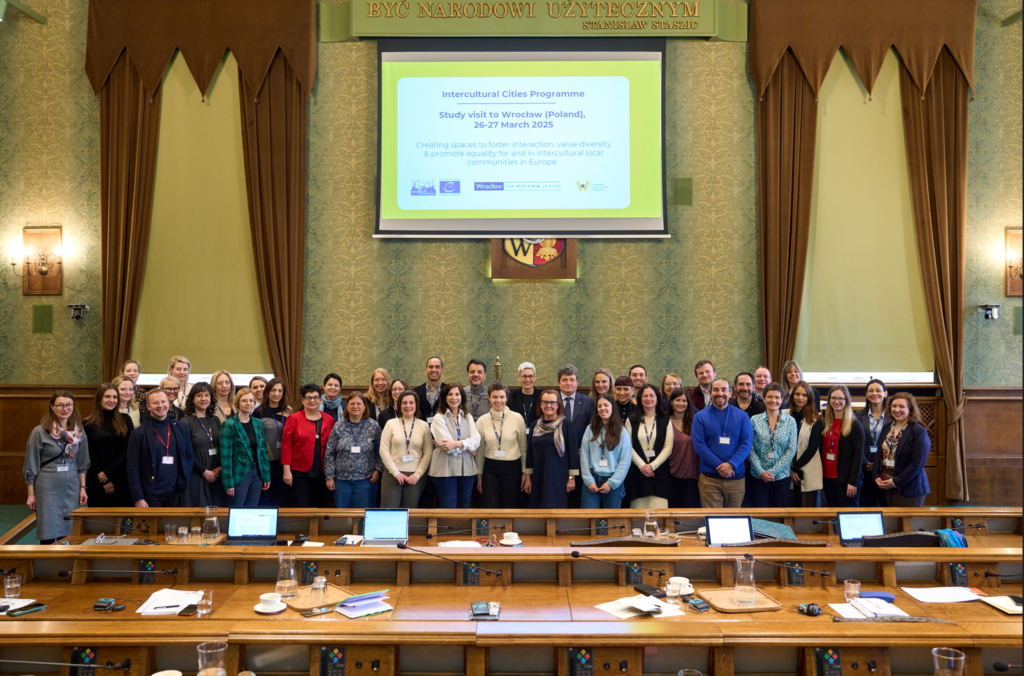
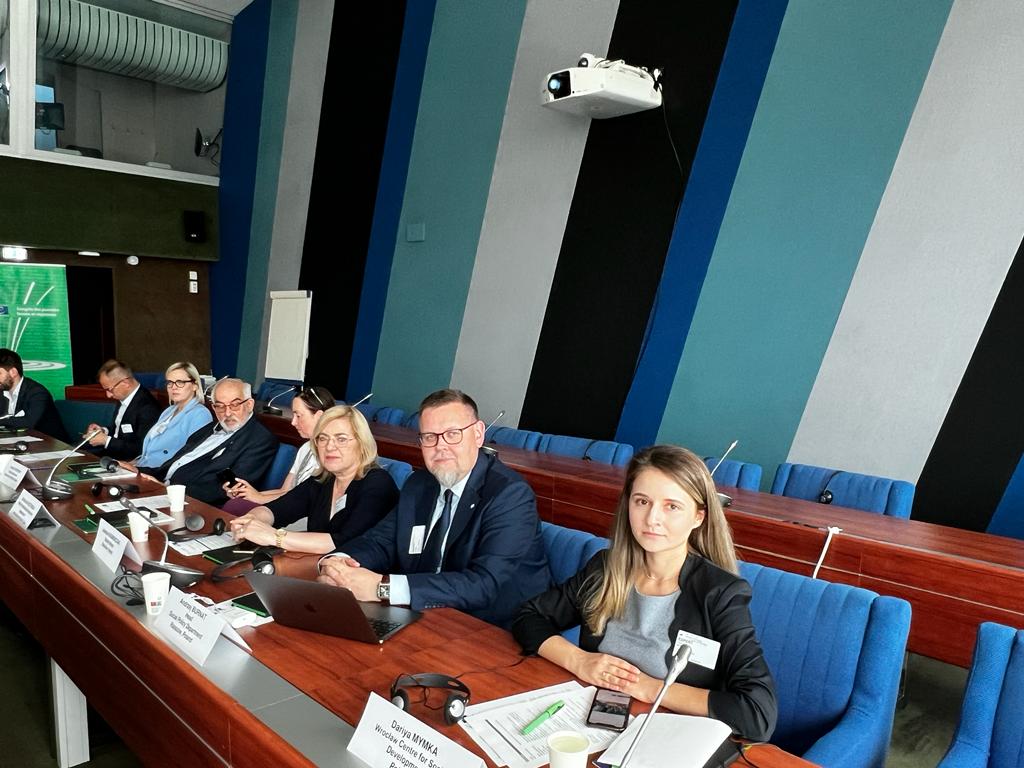
Today’s Wrocław is undoubtedly an intercultural city. Before February 2022, it was estimated that over 120,000 people from over 120 countries lived in our city. Today, those numbers are even greater. Thousands of foreign-language pupils are enrolled in Wrocław’s primary and secondary schools. Joining the well-accomplished Intercultural Cities programme is therefore a natural next step.
The Intercultural Cities Programme (ICC) is a joint action of the Council of Europe and the European Commission, initiated during the European Year of Intercultural Dialogue 2008. The programme aims to support local authorities in developing and implementing an inclusive integration policy based on the model of intercultural integration policy that enables authorities, communities, organisations, and businesses to manage the diversity of people in a way that ensures the equal value of all identities, coherence, and competitive advantage.
Diversity as a resource
The model on which the Programme is based helps public authorities achieve inclusion, equality, and prosperity by unlocking the potential of diverse societies while minimising risks related to human mobility and cultural diversity. It is worth noting that the model is not tailored to “one size fits all” and takes into account the diversity in demographics, governance of individual cities, as well as the fact that each of them in the context of the intercultural policies does not start from scratch. Thus, the model does not serve as a manual, but rather a set of actions, practices, and tools to be picked up by each member accordingly. Currently, 162 cities from different parts of the world are members of the Programme (as of November 2023); along with Wrocław, two other Polish cities that joined the programme are Lublin and Kraków.
“Through the Intercultural Cities Programme (ICC), cities have proven that diversity can be managed as a resource, amplifying the social and economic benefits of heterogeneous communities and minimising its potential negative effects. Despite the enormous complexity of diverse communities and the potential conflicts involved, cities can manage diversity and benefit hugely from what migrants and minorities can offer to the community. To do this, they need to review a range of institutions, services, and policies, and create the appropriate governance structures and mechanisms to remove obstacles as well as enhance the integration of migrants and minorities and their contribution to the development of the city.” / Source: “The intercultural city step by step”
What’s in it for Wrocław?
Thanks to participation in the ICC Programme, our city has the support of experts and access to a comprehensive methodology helpful in creating diversity management and inclusion strategies and to resources including extensive city profiles, a database of good practices, detailed guides on the implementation of activities, as well as handbooks and guidelines on specific policy areas.
Wrocław is also part of a community sharing best practices and experiences and will receive a number of proven tools – both analytical and practical, for developing and evaluating policies. As part of the programme, Wrocław can count on the support of specialists, also in the form of expert visits to Wrocław. In 2022, representatives of the City Hall took part in, among others, a study visit and a meeting of ICC coordinators. During Dialogopolis’22 – days of dialogue and intercultural education, an international panel was held to introduce the idea of ICC to Wrocław’s stakeholders and present experiences of longtime ICC members – the cities of Lublin and Bilbao (Spain).
The Intercultural City Index as a step towards a strategy
Wrocław’s key goal is to complete the “Intercultural City Index”, on the basis of which we will receive a comprehensive analytical report containing a description of Wrocław’s intercultural profile as well as recommendations and examples of good practices from other cities. This step will be followed by an expert visit with the participation of independent experts and a representative of the Council of Europe, involving representatives of the City and a wide range of local stakeholders, in order to review urban policies from an intercultural perspective and develop an intercultural strategy. After the visit, the experts will help us work on the continuation of the current Strategy for Intercultural Dialogue for 2018-2022, help formulate guidelines for the coming years and support local stakeholders in developing their intercultural strategy for positive diversity management.
Links: