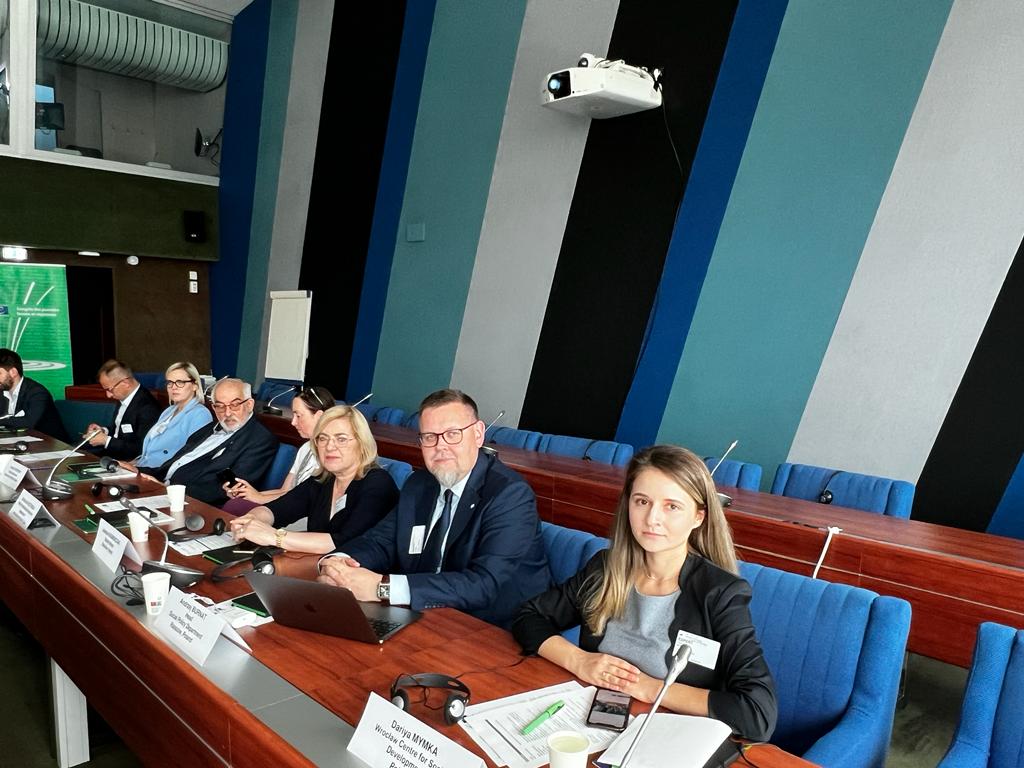
Staff of the Wrocław Centre for Social Development (WCRS) represent Wrocław Municipality in an international project launched in 2023 by the Secretariat of the Congress of Local and Regional Authorities of the Council of Europe, “Strengthening resilience in local and regional authorities facing migration challenges”. The project aims to cooperate with Council of Europe member states, collect good practices and draw attention to the challenges of managing migration at local level.
The project “Strengthening resilience in local and regional authorities facing migration challenges” brings together representatives of local authorities and local government administrations from Romania (municipalities: Bogdan Vodă, Măgurele and Tulcea), Moldova (Edinet, Straseni, Vinogradovca) and Poland (Wrocław, Rzeszów, Hrubieszów). Together they form the Community of Practice on Migration and Human Rights at Local Level (hereinafter: the Community of Practice). The purpose of this platform for mutual exchange is to identify the problems that territorial authorities face in managing migration and to develop practical tools to address them. At regular meetings, members of the Community share good practices in building inclusive societies in their cities and municipalities, particularly with regard to migration-related challenges in the period after February 2022.
Wrocław’s good practices
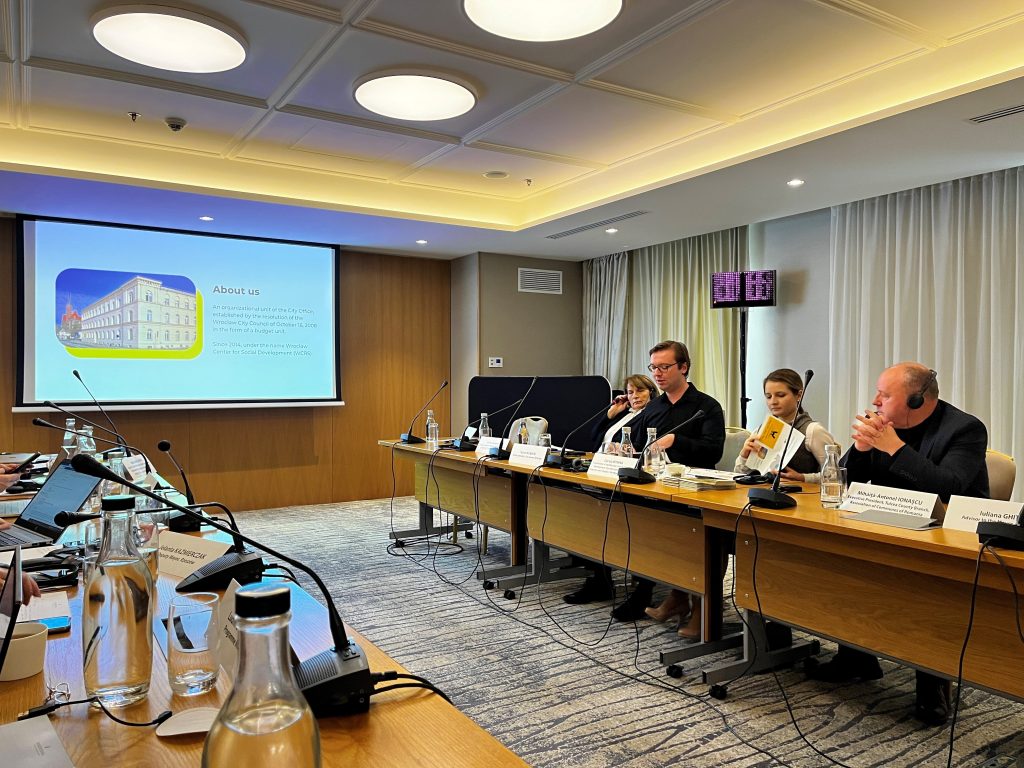
The project has included numerous events at which WCRS staff shared Wrocław’s experience in integrating migrants and refugees. The project was launched in June 2023 at the Council of Europe headquarters in Strasbourg. At the second meeting of the Community of Practice in Bucharest in November 2023, Daria Mymka and Tymon Kubacki of the Intercultural Dialogue Team presented Wrocław’s activities to date in the area of migrant and refugee integration, including the Wrocław Strategy for Intercultural Dialogue (2018-2022), measures supporting refugees after the start of Russia’s full-scale war in Ukraine and the city’s cooperation with UNICEF. The next meeting, held in Chișinău in March 2024, was devoted to building resilience at local level through migration management and social inclusion in the Republic of Moldova.
Discussions on national integration policy
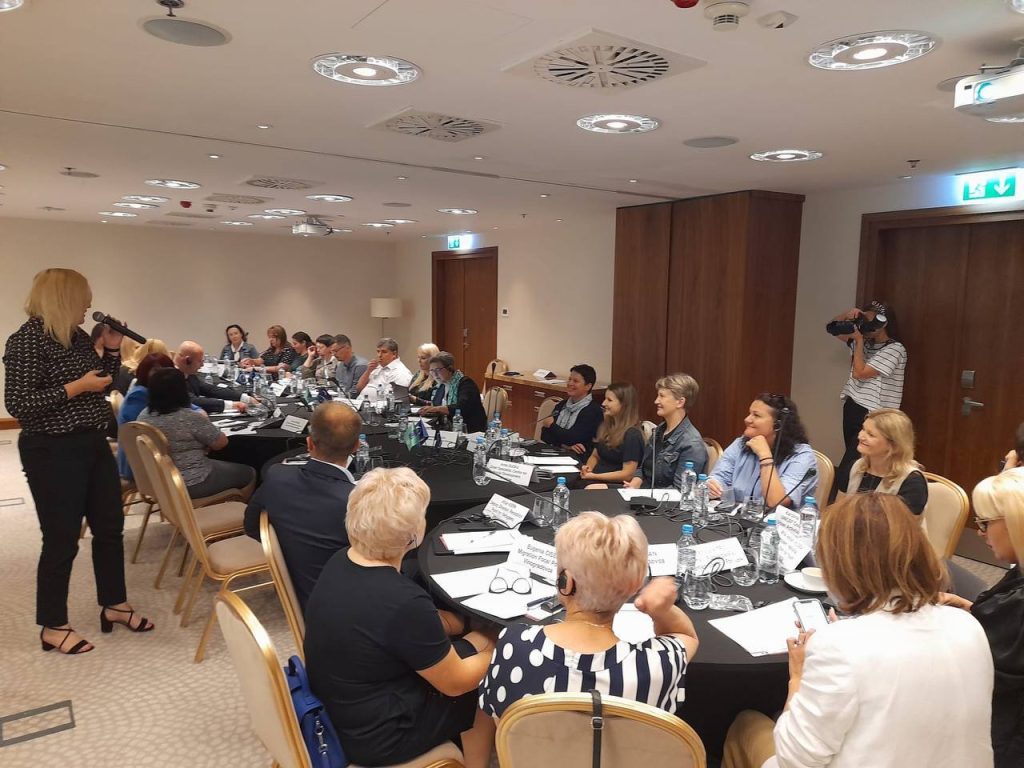
In June 2024, WCRS staff took part in two events in Rzeszów. During a round table on national migrant integration policy in Poland, Marta Majchrzak, WCRS Deputy Director for Cross-Sectoral Projects, presented the key principles and tools for the integration and social inclusion of migrants and refugees in Wrocław. At the next meeting of the Community of Practice, ways of integrating women, children and young people from migrant and refugee backgrounds were discussed in detail. The meeting in Rzeszów concluded with a visit to the newly opened International Integration Centre, which serves as a space for mutual integration, understanding and bringing cultures together in the city.
The final meeting of the project is scheduled for the last quarter of 2024.
————————————————————-
Challenges of integration and migration management in Poland – publication
As part of the project, members of the Secretariat of the Congress of Local and Regional Authorities carried out a baseline assessment of the challenges and needs faced by local authorities in migration management and of integration mechanisms in Poland, the Republic of Moldova and Romania. WCRS staff took part in an in-depth research interview, which resulted in a report presenting the legal, social and historical context of migration in Poland.
The baseline reports on the three countries cover the period from May to August 2023 and are available for download on the website of the Congress of Local and Regional Authorities of the Council of Europe.
Baseline reports on Poland, Romania and Moldova
——————–
The project Strengthening resilience in local and regional authorities facing migration challenges is being implemented by the Secretariat of the Congress of Local and Regional Authorities from May 2023 to the end of December 2024 under the Council of Europe Action Plan on Protecting Vulnerable Persons in the Context of Migration and Asylum in Europe (2021-2025), with the support of Germany.