In the public consultations, we asked residents for their views on the draft Wrocław Intercultural Policy for 2027–2031. We wanted to hear from the people of Wrocław, including migrants, so that the document being developed responds to the real needs and challenges of a diverse community. The consultation report is now available.
In the public consultations held in February and March 2026, together with the Foundation for European Studies (FEPS) and the Social Participation Department of Wrocław City Hall, we asked residents for their views on the draft document.
The intercultural policy was born of the need to set directions for building a Wrocław community that lives in mutual respect regardless of origin, cultural distinctiveness, language or religion. Its overarching goal is a high quality of life in the city and ensuring that every resident feels at home in our shared city, with the same rights and obligations.
Public consultations in a nutshell
The public consultations took place between 17 February and 15 March 2026. Residents of Wrocław, regardless of origin, citizenship or residence status, could take part in person at the Consultation Forum, or online by completing a form (available in three languages) on the Wrocław Rozmawia website and by joining an online consultation meeting. In addition, to hear the views of young people in Wrocław, consultation meetings were held in Wrocław schools and at a local activity centre.
The opinions submitted were analysed to see whether they could be incorporated into the text of the Wrocław Intercultural Policy. Of the 175 opinions, 138 were answered with an explanation, as they were either already addressed in the policy text or concerned issues outside the scope of the consultations.
Of the remaining 37 opinions, 31 were taken into account, 21 of them partially. This means that over 80% of the opinions on the Wrocław Intercultural Policy will influence the wording of the policy and its operational documents.
What next for the intercultural policy?
In the coming months, the Wrocław Intercultural Policy will be supplemented with conclusions from the opinions accepted during the public consultations. The document will also undergo an additional editorial review aimed at updating its content. The next step will be a decision on the form in which the document will be adopted for implementation.
What did we learn from the consultations?
The consultations confirmed that the proposed document is highly consistent with residents’ needs. In many areas, the proposals made matched the provisions already drafted in the document, which confirms that the challenges, objectives and action plans, as well as key partnerships, have been well identified.
The consultation process highlighted expectations of systemic solutions that fall within the remit of central government, in particular the education system, civic and language skills, labour market and employment law regulation, and social assistance support for groups at particular risk of exclusion. It is worth emphasising that most of these challenges have already been identified by the city authorities, and advocacy on legal and regulatory gaps is included in the policy’s planned activities.
Reflections from the initiators of the consultations
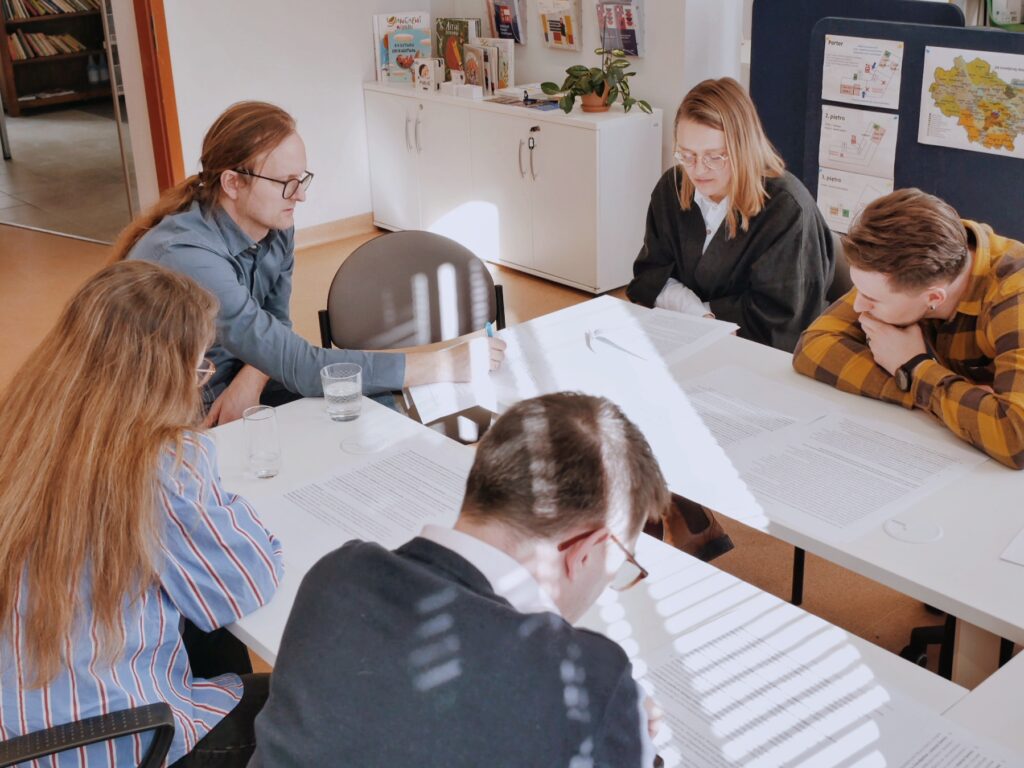
The consultations strengthened the participatory dimension of drafting the document, helped identify new partnerships and gave us a better understanding of partners’ current and planned priorities. The workshop format of the consultations was another opportunity for us to meet and engage in dialogue, and the round-table format allowed participants to express their views and describe their personal experiences.
We are pleased by the strong awareness and understanding that integration is a two-way process between new residents and the host society, as well as by the declarations of cooperation from participants, many of whom represented institutions and civil society organisations.
A positive surprise was the small proportion of voices rejecting migration as a phenomenon or the assumptions and goals of the document. These were accompanied by concerns about a potential threat, understood as the formation of separate groups or cultural communities. An important part of this dialogue was pointing out that the policy being developed aims to counteract isolation by putting the idea of interculturality into practice (i.e. living among others, in relationships and dialogue, not side by side and not as “strangers”).
The consultations confirmed interest in, and the need for, ongoing, regular information (e.g. meetings with organisations, published presentations and notes) about the current activities of Wrocław Municipality.
There were also proposals concerning the document itself, such as clarifying terms including cross-sector cooperation and the intercultural perspective. Many people pointed to the need to expand the list of implementing bodies and partners; this was partly taken on board, in light of experience of cooperation and the possible forms and tools of influence. It was emphasised that the list of partners and implementing bodies is open and is only a proposal.
The question of an intersectional approach (i.e. one that shows how different aspects of identity – ethnicity, gender, age or physical ability – overlap) and an inclusive approach was also an interesting one. In some tasks, given the specific nature of migration and the needs of particular groups (e.g. refugee women experiencing violence), the draft policy specified the need to support these groups. During the consultations, however, it was recommended not to name a specific group but to use a more general wording – people with migration and refugee experience – so as not to exclude other groups in need of support.
Acknowledgements
We would like to thank the teams of the Foundation for European Studies (FEPS) and the Social Participation Department of Wrocław City Hall for conducting the consultation process and for their organisational and expert support.
Link to the report (in Polish): https://dmw.wcrs.dev.foreto.com/publikacje/wroclawska-polityka-miedzykulturowa-raport-z-konsultacji/
The Wrocław Rozmawia website contains information about the entire consultation process: https://www.wroclaw.pl/rozmawia/jaka-bedzie-wroclawska-polityka-miedzykulturowa-raport-z-konsultacji.
For their involvement in the consultation meetings and for providing venues, we would like to thank the management of the 15th General Secondary School in Wrocław, Vocational School Complex No. 5, Primary School No. 2 and Technical Secondary School No. 17. We also thank Stowarzyszenie Żółty Parasol i Partnerzy, the operator of the Ołbin Local Activity Centre.
Many thanks to all residents for taking part in the consultations. Your voice matters!
The consultations and the report were prepared as part of the public task “Support for public consultation processes in Wrocław Municipality in 2025–2026”, carried out by the Foundation for European Studies and co-financed by Wrocław Municipality.
Photo: Aleksandra Nerkowska