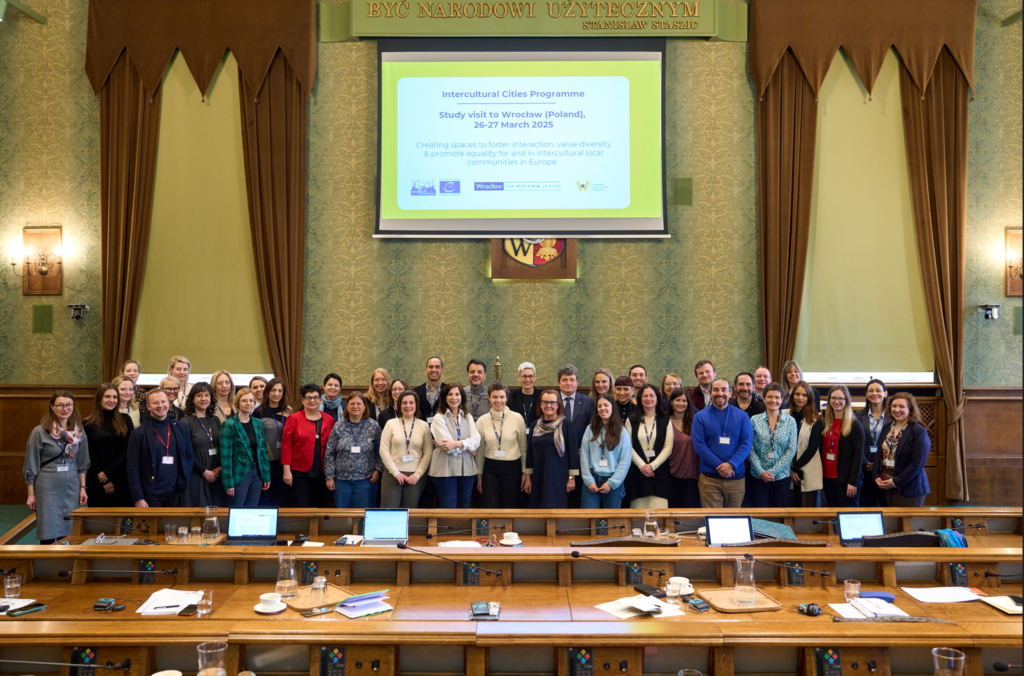
Creating spaces that foster intercultural interaction and integration in local communities – this was the theme of a two-day study visit for staff of local governments belonging to the Council of Europe Intercultural Cities network, held in Wrocław on 26–27 March.
The visit, opened in the Session Hall by Deputy Mayor of Wrocław Ryszard Kessler and Rita Marascalchi from the Council of Europe’s Intercultural Integration Unit, aimed to present good practices and solutions implemented by Wrocław to build a community that is open, respects cultural diversity and nurtures integration and relations between residents of different backgrounds.
As Rita Marascalchi (Council of Europe) emphasised: “Meaningful social interactions foster mutual understanding, trust and a sense of belonging to a community with shared values. Wrocław shows us how cities can use their own spaces to achieve this goal. As an active and valued member of the Intercultural Cities network since 2021, Wrocław is hosting participants from cities around the world during this study visit to demonstrate its commitment to the values of the Intercultural Cities Programme: equality, diversity, interaction and participation.”
The group of twenty study visit participants – local government staff from cities in countries including Portugal, France, Italy, Mexico and Latvia – learned about the city’s key initiatives to create programmes and places that foster intercultural dialogue and cooperation, including in Wrocław’s neighbourhoods. An important element was a presentation of the measures taken in the first months of 2022, when Wrocław took in more than 200,000 people as a result of Russia’s aggression against Ukraine. After the presentation session at the Town Hall, the group visited the District of Four Denominations (District of Mutual Respect) to learn more about an intercultural project focused on dialogue and cooperation between religious and cultural groups.
Ewa Gołąb-Nowakowska, Director of the Foreign Cooperation Office of Wrocław City Hall, emphasised: “For Wrocław, membership of the Intercultural Cities network is not only a platform for strengthening partnerships, but above all a source of inspiration and of other cities’ experience, enabling us to implement solutions that build a strong and integrated community.”
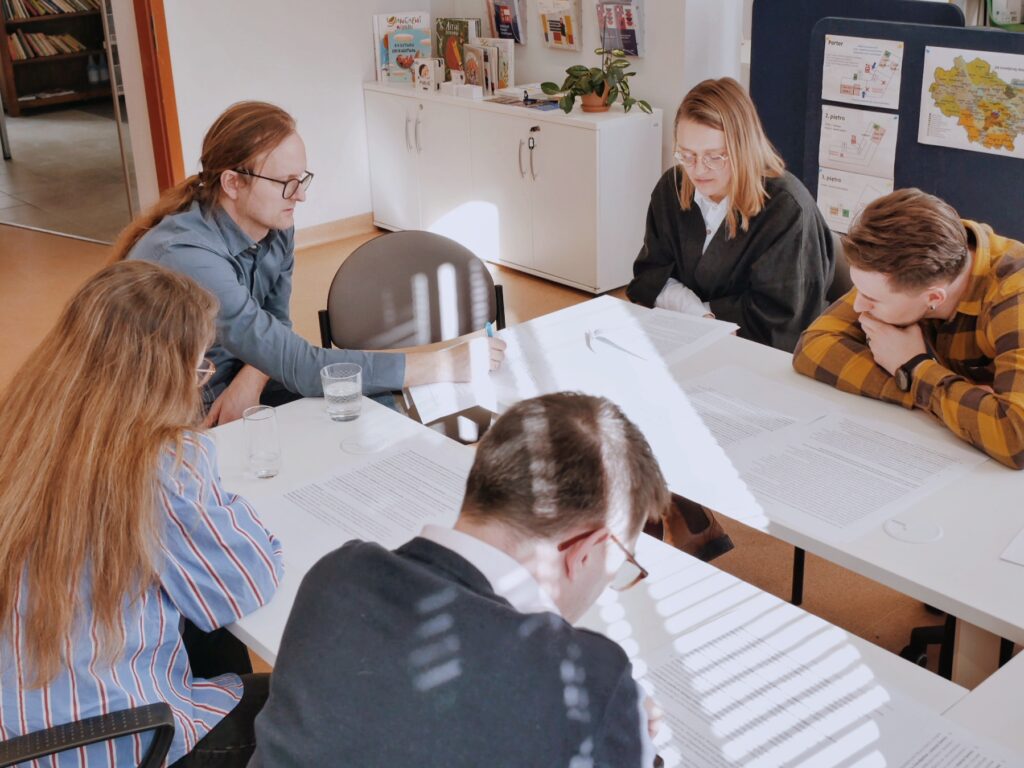
On the second day of the visit, the programme included workshops at Przejście Dialogu (Passage of Dialogue), the social activity space of the Wrocław Centre for Social Development. In the afternoon, during a walk around Nadodrze, the guests also met representatives of Wrocław civil society organisations working to support people with migration experience and to promote intercultural dialogue: Stowarzyszenie Nomada, Fundacja Dom Pokoju and Fundacja EkoRozwoju. The aim of the meetings was to show how cross-sectoral cooperation, led by non-governmental organisations and municipal institutions, works in practice. The highlight of the visit was a tour of the colourful courtyards on Roosevelta Street, which introduced the guests to the idea of placemaking, i.e. the grassroots creation of public spaces for and by local communities.
“It is a great pleasure for us to see the cities respond so positively to Wrocław’s invitation. Although we joined the network only recently, we are delighted to host its members and share our many years of experience in intercultural dialogue and building strong local communities,” adds Dorota Feliks, Director of the Wrocław Centre for Social Development, the municipal unit responsible for intercultural dialogue in Wrocław.
For Wrocław, this was the second event organised jointly with the Council of Europe Secretariat as part of the Intercultural Cities network. A training course for local government staff on countering disinformation, entitled “Anti-rumour strategy in Polish cities”, was held in May 2024 as part of the Academy for the Integration of Migrants and Refugees in Polish Cities.
——————————————-
The Intercultural Cities Programme (ICC) is a joint initiative of the Council of Europe and the European Commission, launched during the European Year of Intercultural Dialogue 2008. It aims to support local authorities in designing and implementing intercultural integration policies. Wrocław has been a member of the ICC network since 2021. Find out more about the programme and Wrocław’s membership of the network on the Wrocław Centre for Social Development website