
Social innovation laboratory at Przejście Dialogu (Passage of Dialogue)
The “Social Laboratory” is an initiative of the Przejście Dialogu team of the Wrocław Centre for Social Development, launched in 2023.
The project aims to give students of Wrocław universities an opportunity to put the knowledge they have gained into practice and to work on concrete solutions for integration and intercultural activities in Wrocław.
The Social Laboratory project is carried out in partnership with Wrocław academic institutions, non-governmental organisations, institutions and people involved in intercultural dialogue.
In the 2023/24 academic semester, the Laboratory’s participants are students of the Institute of Ethnology and Cultural Anthropology of the University of Wrocław.
The essence of the project is to create opportunities for cooperation between the academic community, primarily students, and practitioners conducting intercultural activities, e.g. in non-governmental organisations or local activity centres.
The project is interdisciplinary by design, and students of all fields of study interested in intercultural issues can take part
Courtyard culture in practice
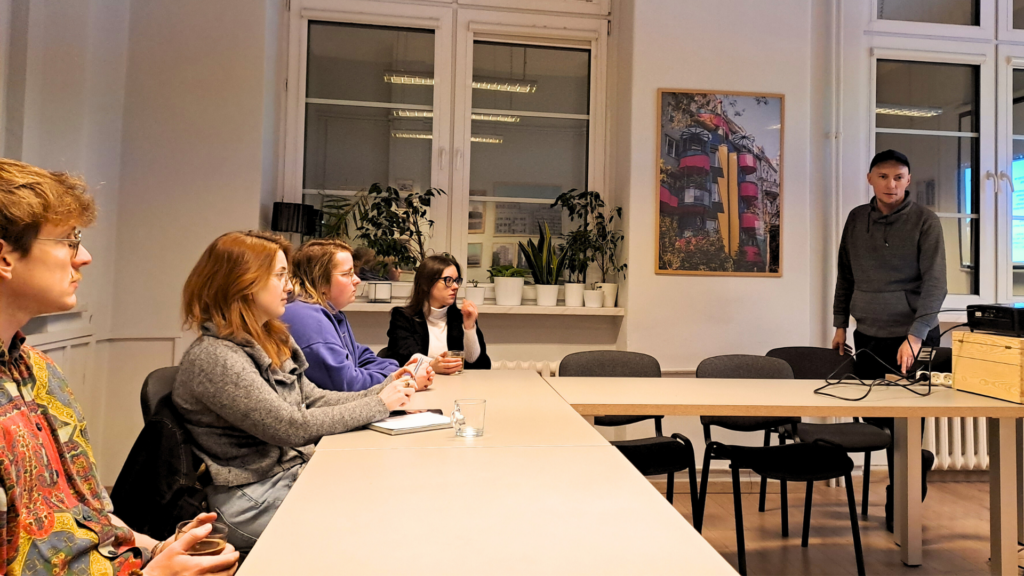
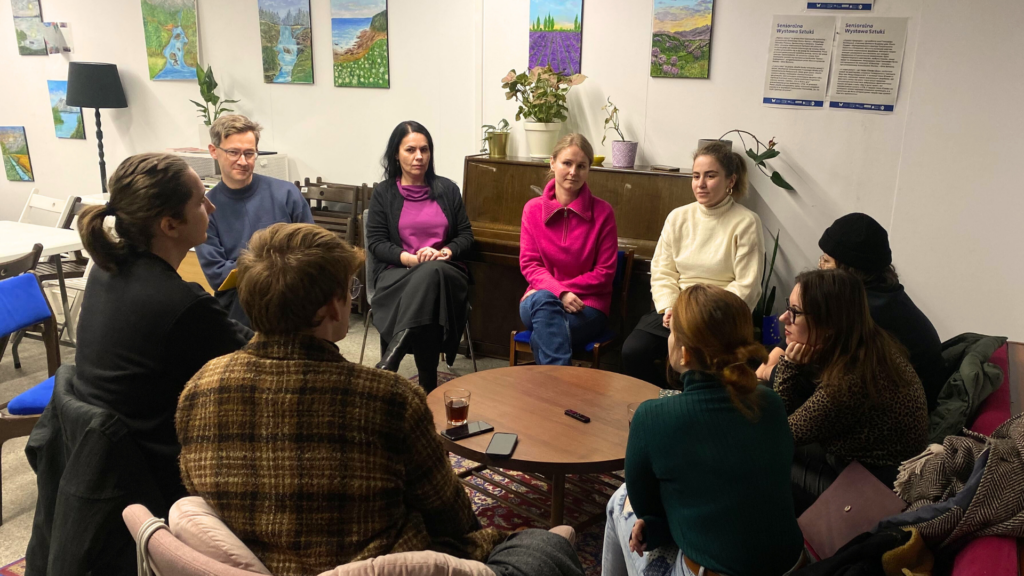
In the first edition of the project, during the winter semester, cultural anthropology students of the University of Wrocław, supervised by Prof. Katarzyna Majbroda, are studying courtyard culture. As part of the course “Field Laboratory: Creating Urban Culture in the Non-Governmental Sector”, the young researchers are conducting fieldwork and meeting social practitioners at Przejście Dialogu and at the project partner, the Plac Grunwaldzki OD NOWA Local Activity Centre.
Both Przejście Dialogu and the Local Activity Centre (CAL) at ul. Skłodowskiej 63A are spaces for social action, supporting grassroots initiatives, organising volunteering and including individuals and groups in the life of the local community, among them people with experience of migration or seeking refuge.
Students have the opportunity to learn about ongoing intercultural activities, which are often a response to the specific needs of these groups.
As part of the course, students are to design and carry out a research process in order to complete the assigned tasks by the end of the semester, including:
-
mapping and analysing the differences and similarities between the practices of co-creating courtyards and related activities in Wrocław and in the home cities of people with migrant and refugee experience;
-
describing the behaviours emerging in Wrocław’s courtyards and playgrounds as a result of interactions between Wrocław residents and people arriving in the city from Ukraine.
The project will culminate in a presentation of the research results at an open meeting at Przejście Dialogu, scheduled for February 2024.
Who can take part in the Social Laboratory?
We invite students and academics of Wrocław universities to take part in the project. The project is open to all universities and fields of study, not only the social sciences. During the project, we jointly develop its central theme, define research methods and work on carrying it out.
If you are interested in working with us, write to us: przejsciedialogu@wcrs.pl
More about the Social Laboratory project: courtyard culture
Academic, methodological and organisational coordination of the project: Dr hab. Katarzyna Majbroda, Professor at the University of Wrocław (Institute of Ethnology and Cultural Anthropology, University of Wrocław), Dr Albert Miściorak (Przejście Dialogu coordinator/WCRS)
Although Wrocław has for years been building its image as a multicultural city, like other Polish cities it was a relatively homogeneous space in ethnic and cultural terms. Wrocław’s social and cultural space has changed significantly in recent years thanks to migrants and refugees.
The presence of new residents poses a challenge in creating public spaces that are open to diversity. The newcomers have brought with them questions about how they experience the new space, become familiar with it, adapt it and change it. The answers to these questions may be of practical importance, contributing, among other things, to a deeper understanding of intercultural integration processes.
During the Social Laboratory meetings, various aspects of the intercultural integration process in Wrocław are addressed. In the 2023/2024 semester, we will look at the characteristics and transformations of Wrocław’s cultural space with regard to courtyards and playgrounds. These are natural meeting places for children, parents and carers, and at the same time spaces of diverse behaviours and of the meanings and values that accompany them. They are also places where new rules for living together and arranging shared urban spaces take shape.
The main aim is to study the ways in which courtyard culture is practised, to analyse the materials and data collected during the project, and ultimately to gain knowledge about the courtyard practices of new residents in their countries of origin and those developing in Wrocław, a city in the host country. An important aspect of the research is mapping and analysing the differences and similarities between the practices of co-creating courtyards and related activities in Wrocław and in the home cities of people with migrant and refugee experience. Also of interest will be the new behaviours emerging in Wrocław’s courtyards and playgrounds as a result of interactions between residents of Wrocław and people arriving in the city from Ukraine.