For over twenty years, mid-January has been a special time of gatherings for Wrocław’s national and ethnic minorities, thanks to two events: the Wrocław Kutia and Joyful Carolling. They are not only an opportunity to sing carols together at the table, but also a meeting of friends, supporters and organisations working for Wrocław’s minorities.
Wrocław Kutia
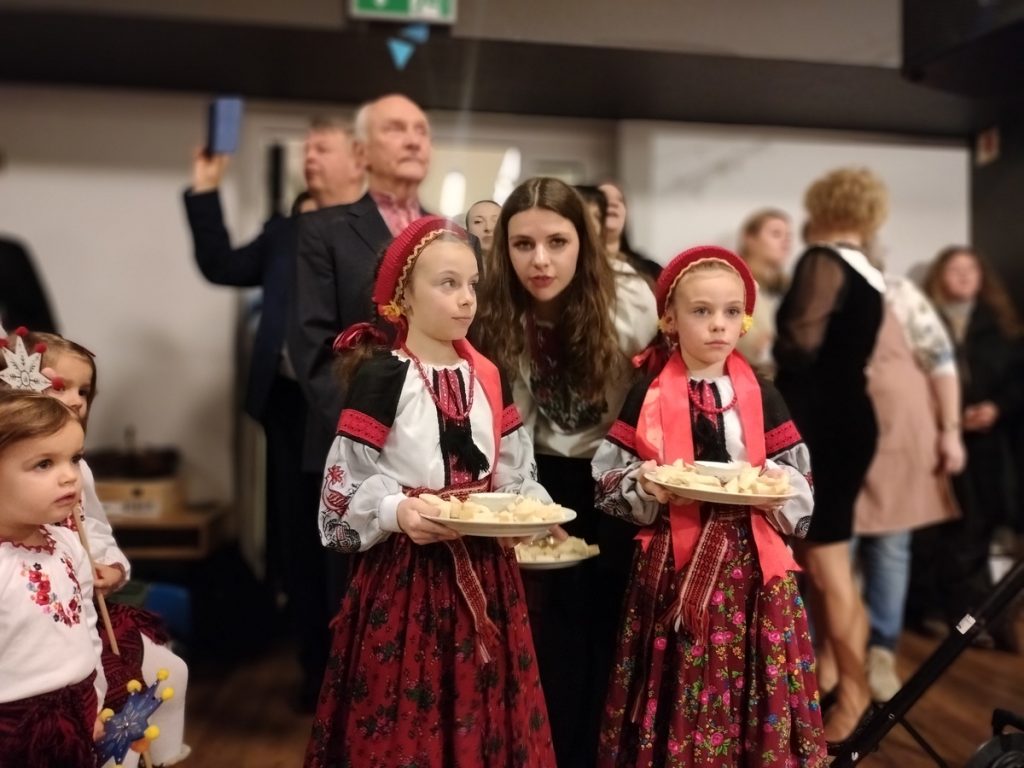
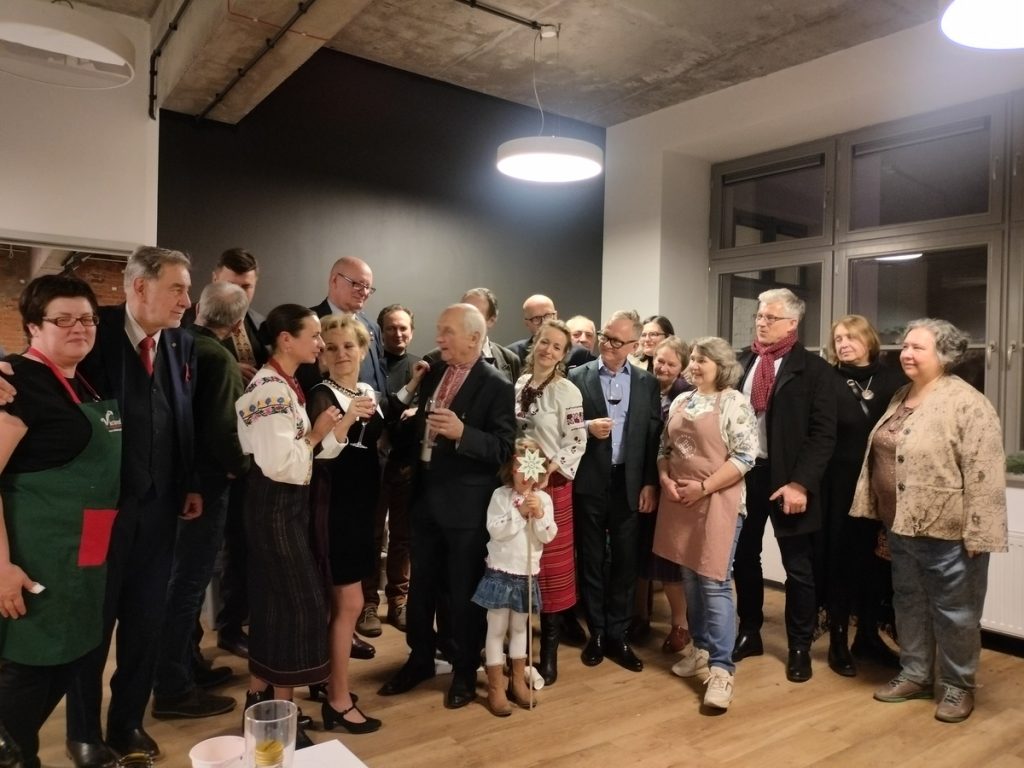
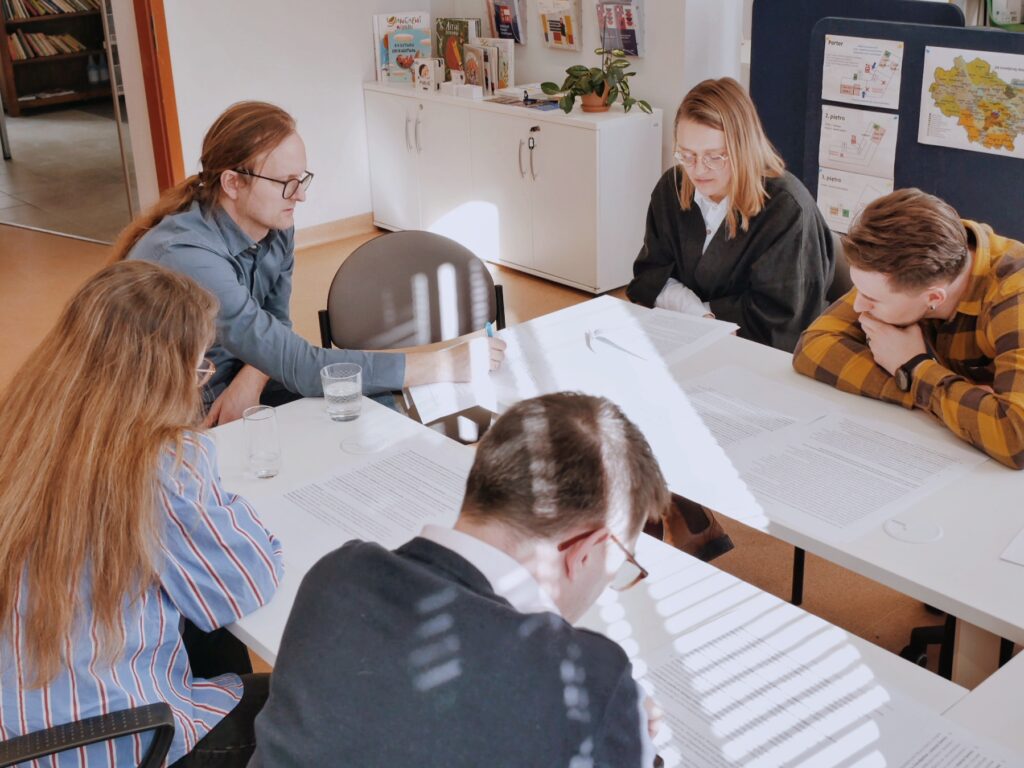
This year it was held for the 28th time. It is a traditional Christmas gathering of Wrocław’s national and ethnic minorities. Ukrainians, Poles, Germans, Jews, Austrians, Karaites, Georgians, Armenians, Catholics, Greek Catholics, Protestants and Orthodox Christians met at a shared table, over traditional dishes and Ukrainian and Polish carols.
Guests included the Mayor and Deputy Mayors, members of the City Council and the Regional Assembly, rectors of Wrocław universities, diplomats, representatives of organisations, associations and unions, and figures from the world of culture, including the Wrocław writer Marek Krajewski.
– Kutia brings together Wrocław’s family of friends of Ukraine. The past year has been very hard for us. Ukraine must win, but victory will not come by itself – we have to work for it, especially those of us here. Thank you for your support – said Yurii Tokar, Consul General of Ukraine in Wrocław.
Mayor of Wrocław Jacek Sutryk extended wishes of peace and good health.
The feast began with the sharing of prosphora – wheat sourdough bread spread with honey, which in Eastern Christian traditions is the equivalent of the Christmas wafer.
Pierogi and Jewish-style caviar
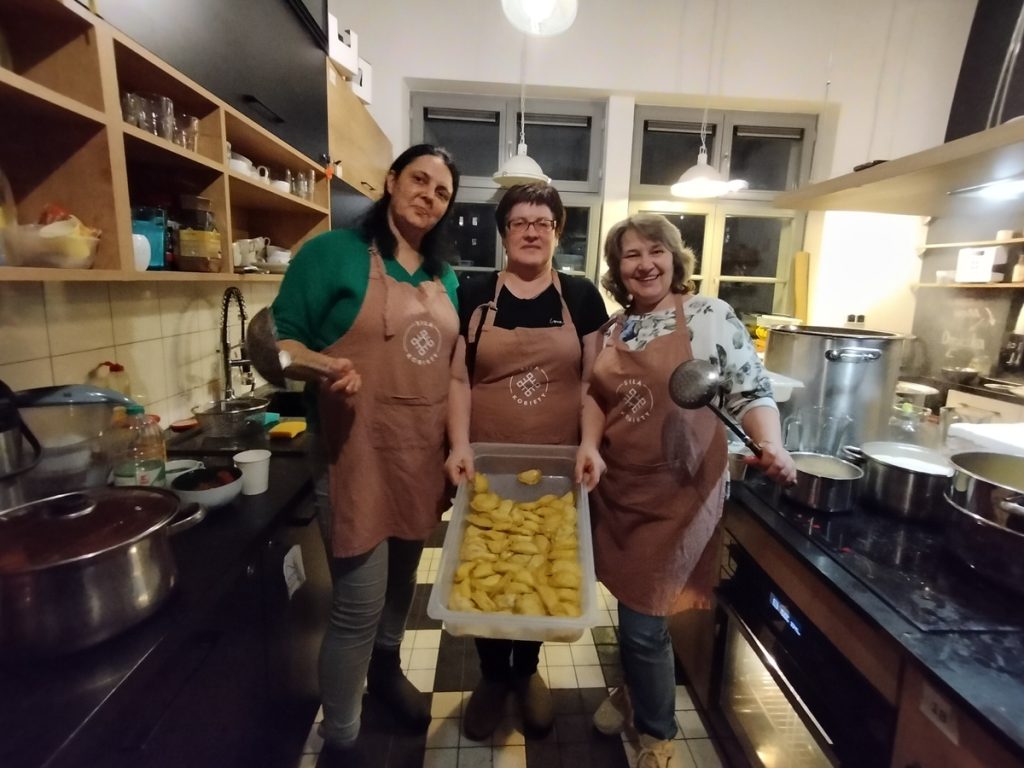
Traditionally, there was no shortage of pierogi on the tables, including ones filled with beans or cabbage. This year, 20 kilograms of them were prepared. There was also fish, Jewish-style caviar (a kind of chicken liver pâté), goose pâté, gołąbki (stuffed cabbage rolls) and the main dish – kutia, a sweet dish made of boiled wheat, poppy seeds, honey, dried fruit and nuts.
But the essence of the Kutia is not the food, but the meeting, the conversation and the thanks for working together. – We organised the first gathering in 1994, in the same place as today, at Domiwka on ul. Ruska (today, after modernisation and renovation, it is home to Fundacja Ukraina). The Germans brought potato salad, and we brought pierogi, which my mother still made back then. And that’s how it all began – says Igor Salamon, chair of the Wrocław branch of Związek Ukraińców w Polsce, without whose vision of cooperation thirty years ago, commitment and the relationships he built these gatherings would not exist.
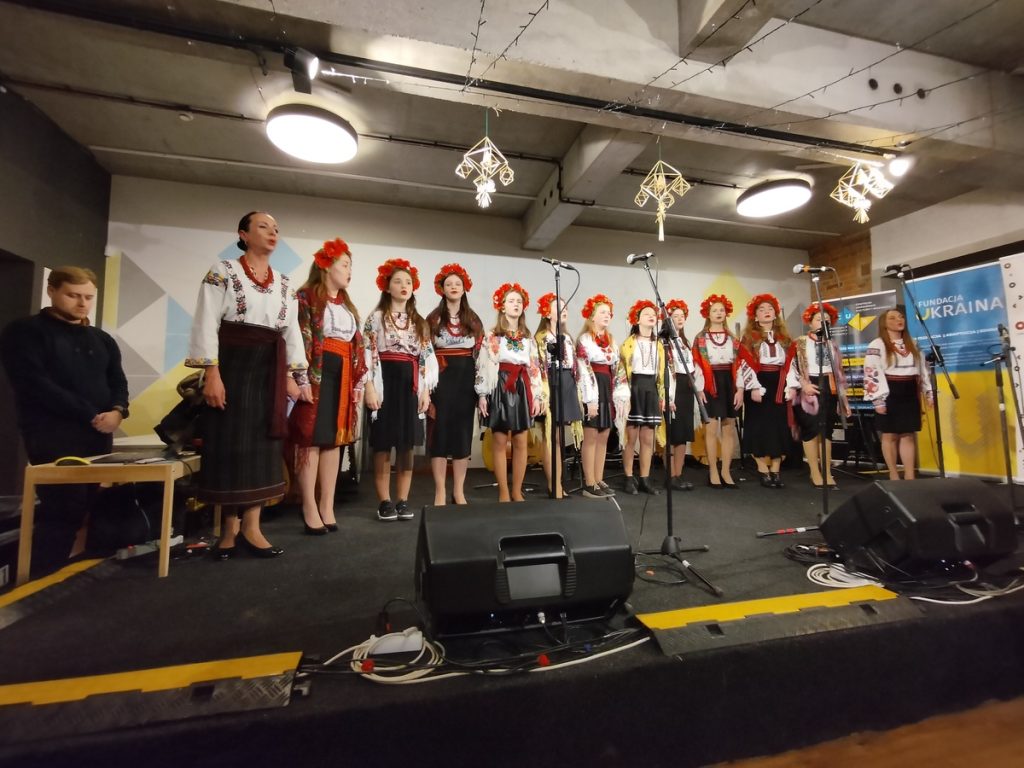
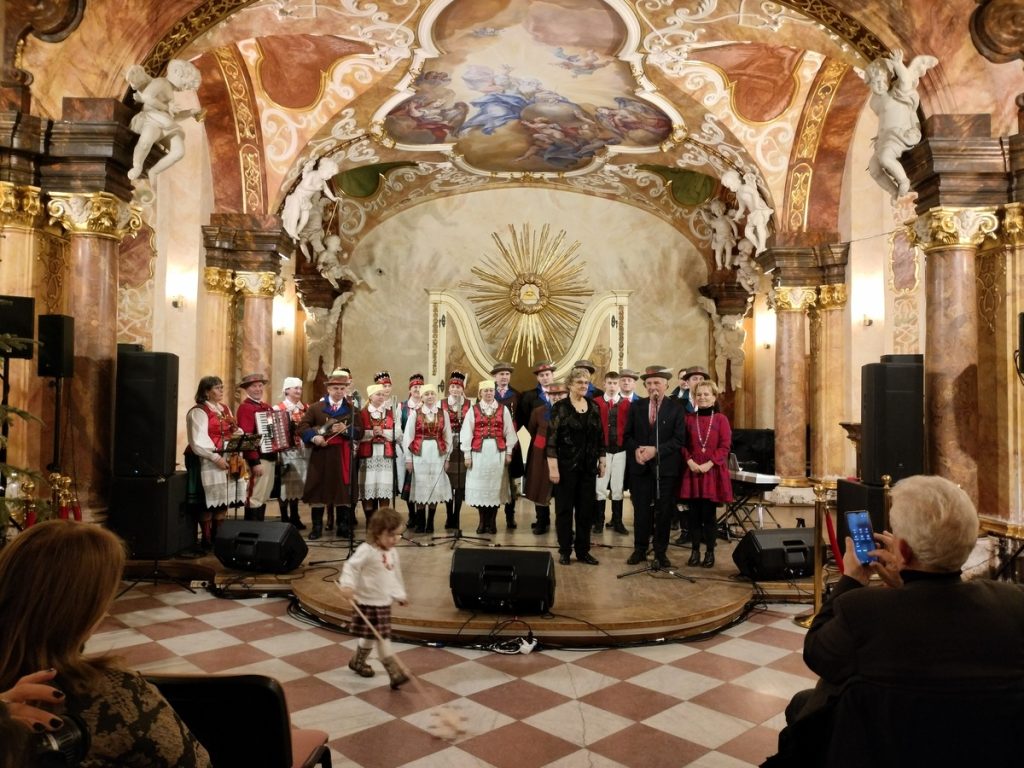
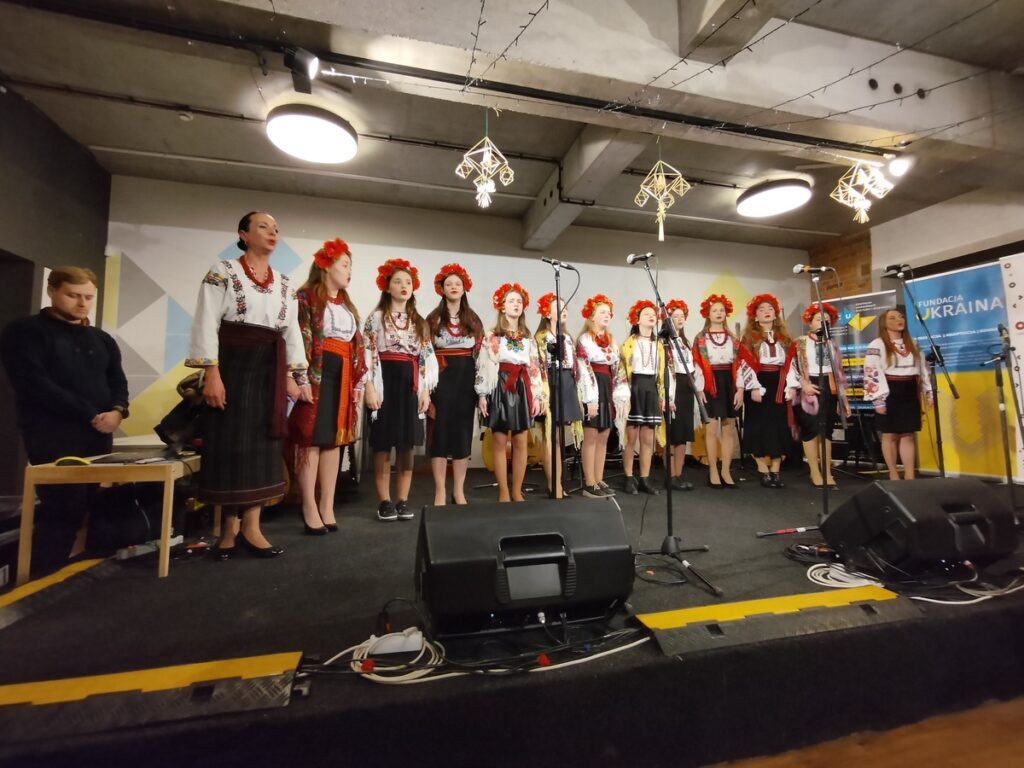
During the evening, carols were performed by the Lemko band “Sestry Boczniewicz”, the Kurpie ensemble Pod Borem from Zawady, the bandura players of the “Armanda” group and the “Tonika” choir from Lviv.
The main organisers of the Kutia, with the support of Wrocław City Hall and Fundacja Ukraina, are the Wrocław branch of Związek Ukraińców w Polsce and the Centre for Culture and Art in Wrocław.
Ukrainians in Wrocław
They are not only migrants and refugees who have arrived since the outbreak of the full-scale war in Ukraine. The Ukrainian minority, i.e. Polish citizens of Ukrainian descent, has lived here since the mid-20th century. In the 1950s, they found a home at ul. Ruska 46, where Fundacja Ukraina is now based. Greek and Bulgarian organisations were also based in this building. Cooperation between Wrocław’s minorities dates back to the mid-1990s and was sealed in 2009 by the signing of the Kaleidoscope of Cultures agreement, which brings together Wrocław’s national and ethnic minorities.
The second day of celebrations: Joyful Carolling
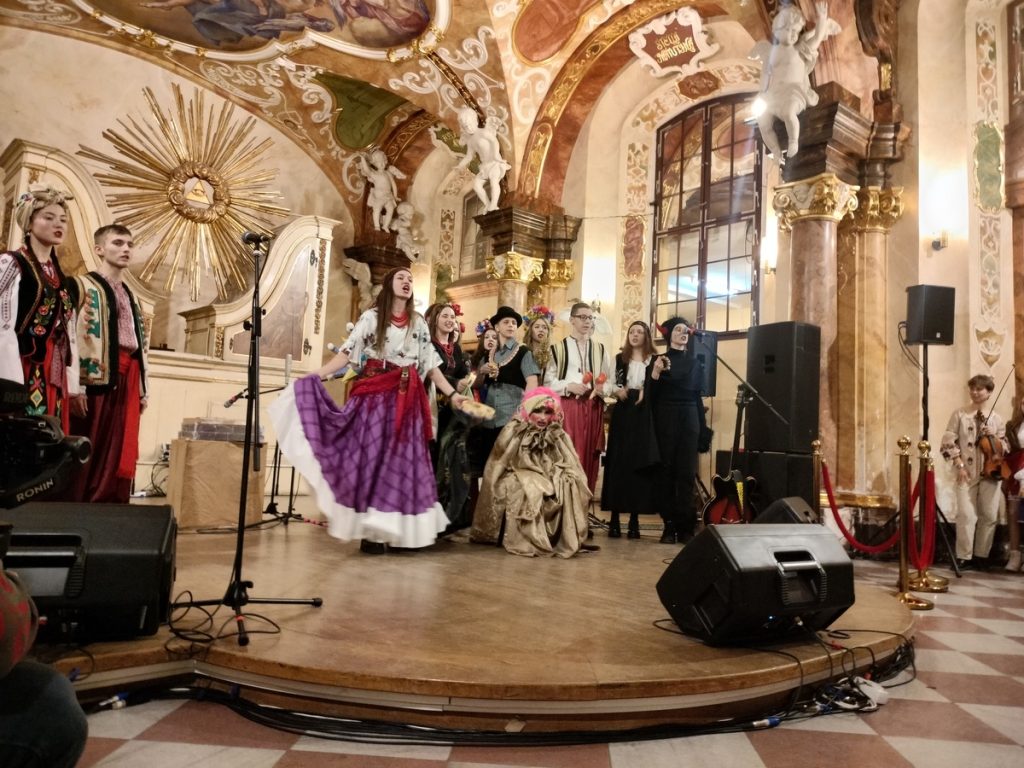
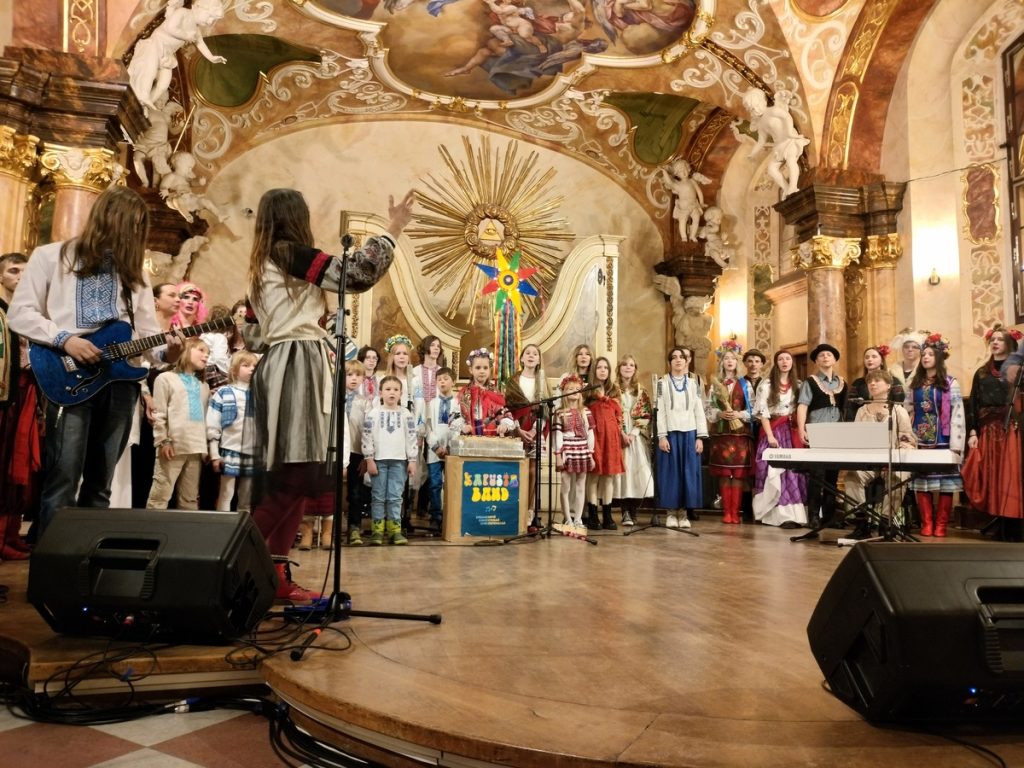
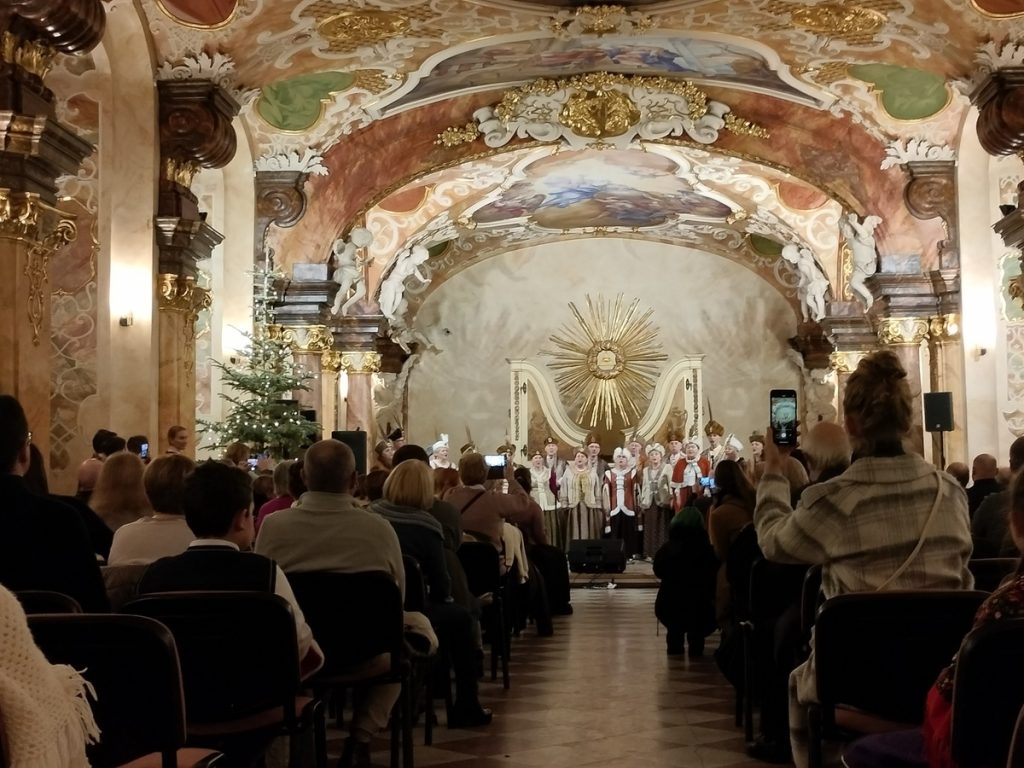
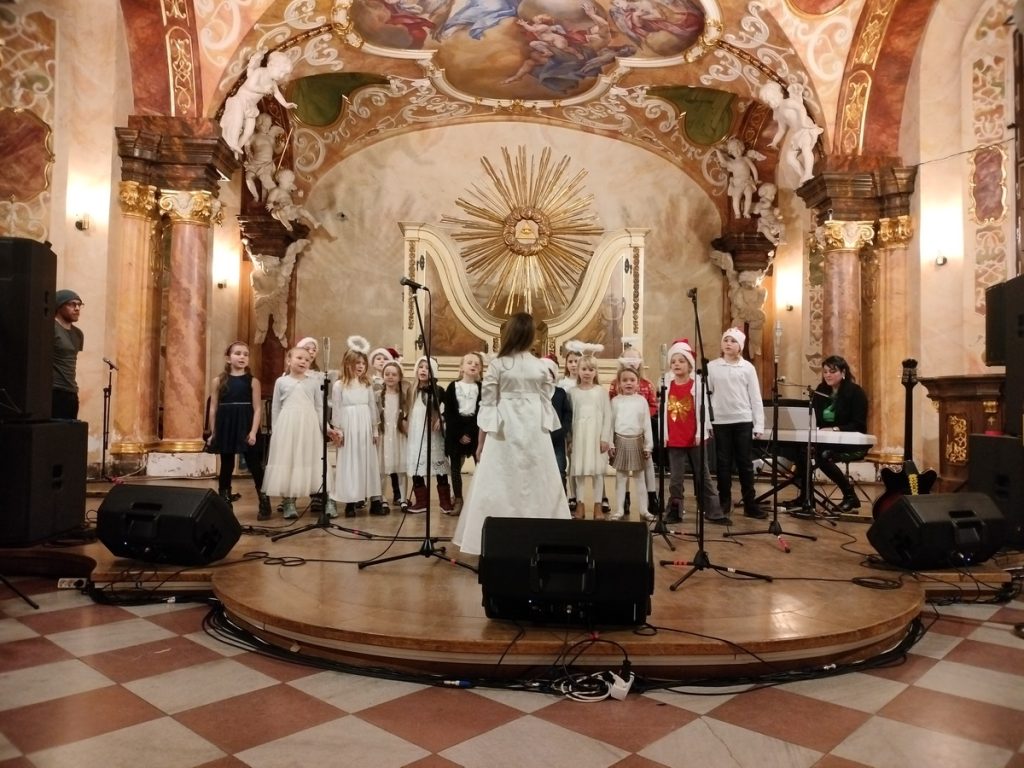
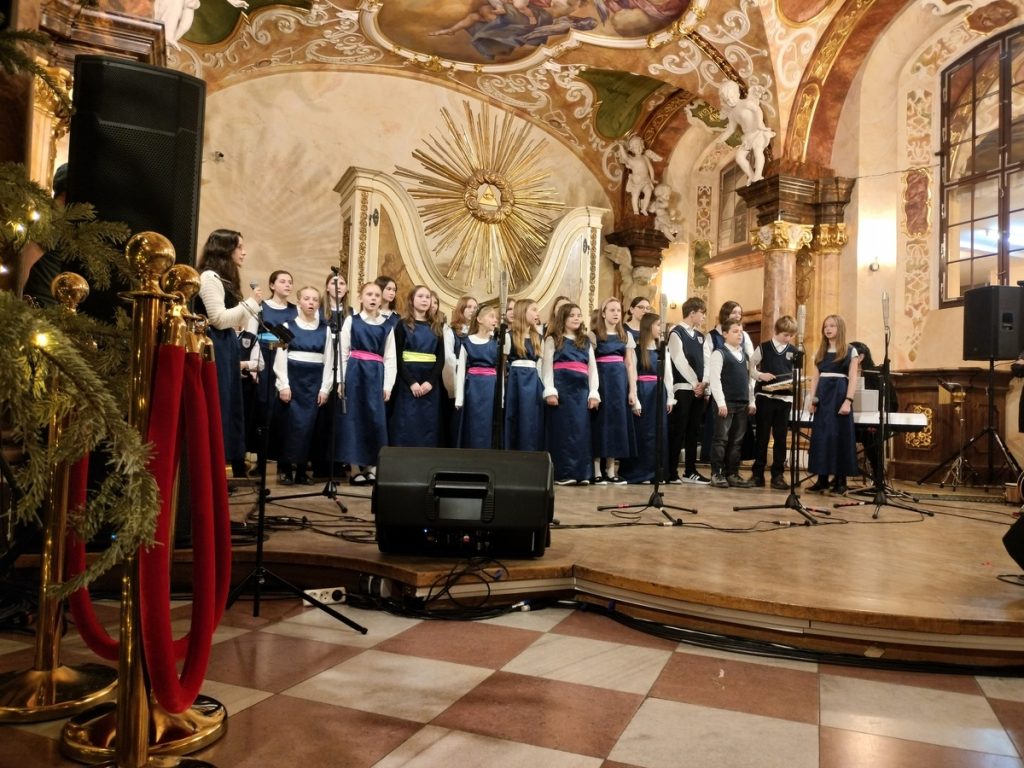
It is an opportunity to discover carols from different countries and regions. This year, 10 groups performed on the stage of the Oratorium Marianum of the University of Wrocław. Of course, the youngest performers stirred the most emotion with their sincere commitment and childlike joy, and their carols moved many to tears.
Young people from a Ukrainian-language school in Legnica performed with a vertep – a troupe of Ukrainian carollers – complete with an angel, a devil, a star bearer and other traditional characters.
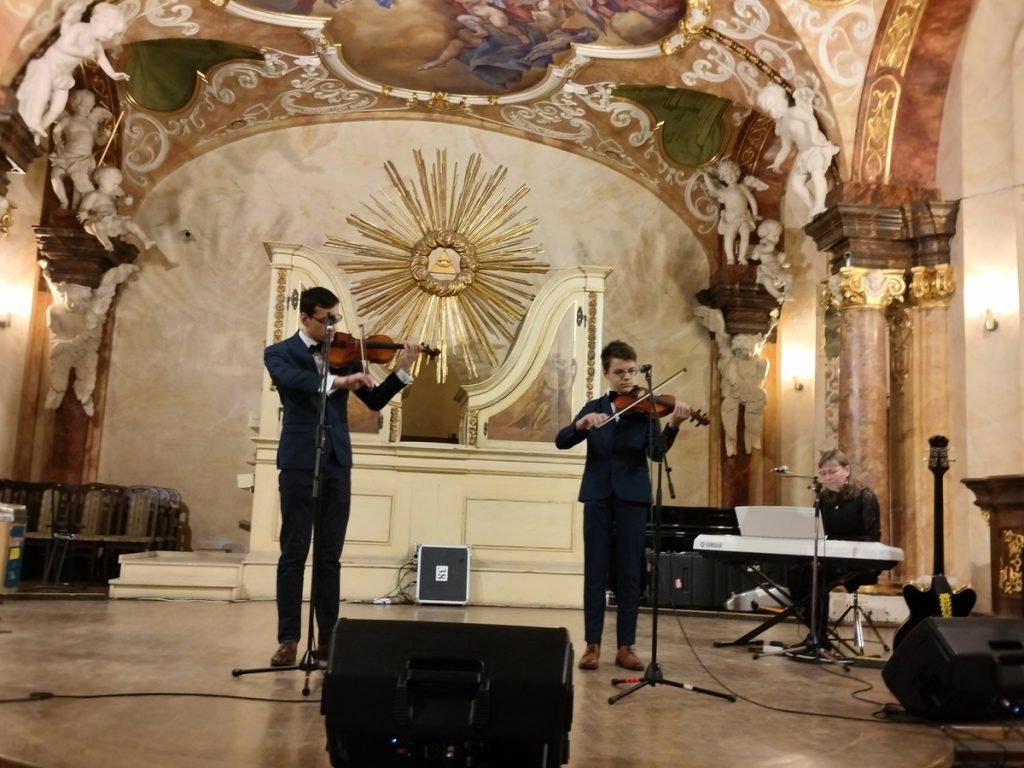
A real musical feast was offered by “Kapusta Band”, made up of refugee children from Ukraine. They were joined on stage by little ones from the Wrocław branch of Związek Ukraińców w Polsce. Polish folklore and carols were presented by, among others, the Kurpie ensemble Pod Borem from Zawady, the “Piastuny” Choir of ODSK Wrocław, the choir of Primary School No. 12 and “BEL Canto” from Primary School No. 17 in Wrocław. “Sestry Boczniewicz” – two sisters with violins and their father with a guitar – represented Lemko culture.
The evening featured both contemporary and traditional carols which, although sung in different languages, share similar lyrics and melodies. This is the case, for example, with the Ukrainian composition “Shchedryk”, which was performed in several languages that evening.
It was an evening full of beautiful melodies and emotion. It was organised by the Wrocław branch of Związek Ukraińców w Polsce, with the support of the City, the Wrocław Centre for Social Development and the University of Wrocław.