Fifteen years ago, representatives of national and ethnic minorities in Wrocław signed the Kalejdoskop Kultur (Kaleidoscope of Cultures) cooperation agreement. A few years later, this laid the foundations for Fundacja Kalejdoskop Kultur, through which minorities work together and help shape the social fabric of our city.
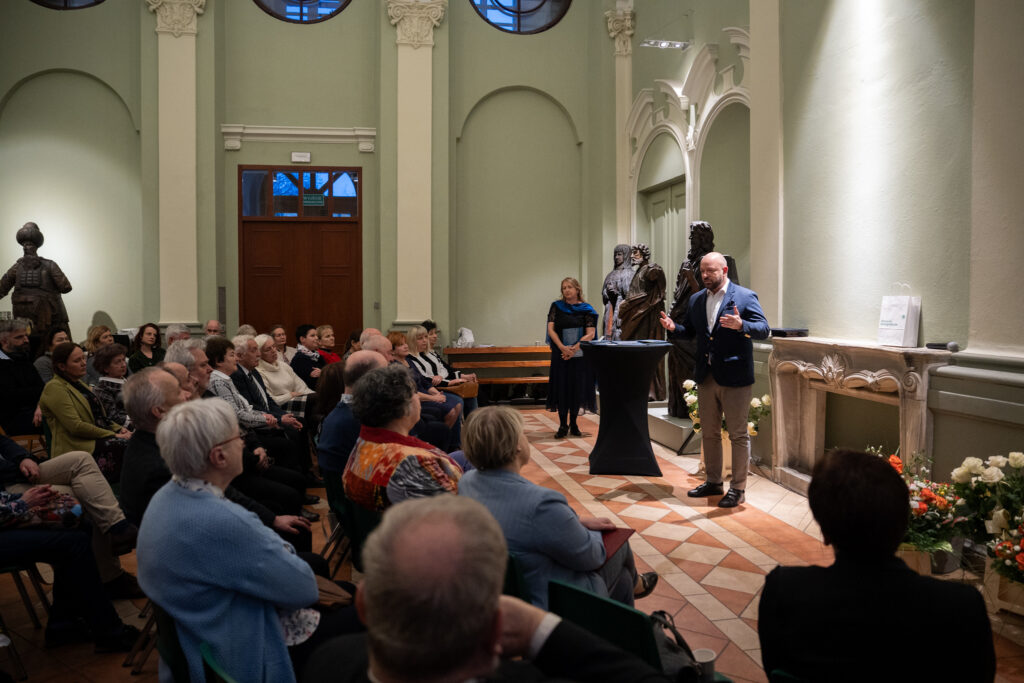
The anniversary of the agreement was celebrated on 19 February 2024 at the Ethnographic Museum (a branch of the National Museum in Wrocław), together with representatives of national and ethnic minority non-governmental organisations and institutions involved in the development of intercultural dialogue.
The history of this cooperation goes back even further – to 2007, when Wrocław’s local government invited representatives of the city’s national and ethnic minorities to work together to promote minority cultures and traditions in Wrocław. One outcome of these efforts was the Kalejdoskop Kultur festival.
It is hard to count all the initiatives, activities and projects undertaken under the agreement. For 15 years, they have all been guided by the same values – building a city whose residents are aware of their roots, traditions and history. New organisations are still joining the agreement signed 15 years ago, so it is not a thing of the past but a vibrant community that continues to make Wrocław a city of encounters.
The ceremony, hosted by the Mayor of Wrocław, Jacek Sutryk, was an opportunity to express gratitude for contributions to the development of intercultural dialogue in Wrocław.
During the event, the Mayor of Wrocław presented letters of thanks for activities carried out under Kalejdoskop Kultur. He also awarded “Merito de Wratislavia – Zasłużony dla Wrocławia” (Meritorious for Wrocław) medals to Mariola Abkowicz, chair of the Kalejdoskop Kultur Agreement, and Elżbieta Berendt, head of the Ethnographic Museum. Towarzystwo Miłośników Wrocławia (TMW) honoured Elżbieta Berendt with the Diamond of Wrocław, and minority activists Igor Salamon, Musa Czachorowski, Michał Hrisulidis and Dorota Kozak-Rybska with TMW Gold Badges.
At the turn of the 20th and 21st centuries, the District of Mutual Respect – the Four Denominations District – was established in Wrocław. It grew out of cooperation between the Jewish Community, the Orthodox Church, the Protestant Church and the Roman Catholic parish, including educational workshops called “Dzieciaki” (“Kids”), supported by the city authorities, during which participants learned about these religions.
In 2003, Wrocław’s local government began implementing the government Programme for the Roma Community, and in 2007 it invited representatives of national and ethnic minorities to work together in an expert team. The team’s task was to set priorities for representatives of minority organisations, i.e. to assess the situation and needs of minorities in Wrocław. On 12 February 2009, minority representatives signed written cooperation agreements, and on 19 September 2014 Fundacja Kalejdoskop Kultur was established. In 2016, the Foundation obtained premises at ul. Ruska 46 A, where multicultural activities take place.
Since 2008, the “Kalejdoskop Kultur” Festival has been held, with the main aim of showing the city’s majority society the cultural significance of its minorities. The festival is deliberately held during the Wrocław City Festival (Święto Wrocławia) so that the cultural heritage of minorities becomes part of Wrocław’s identity in the minds of its residents. Twelve editions of the festival have been held so far.