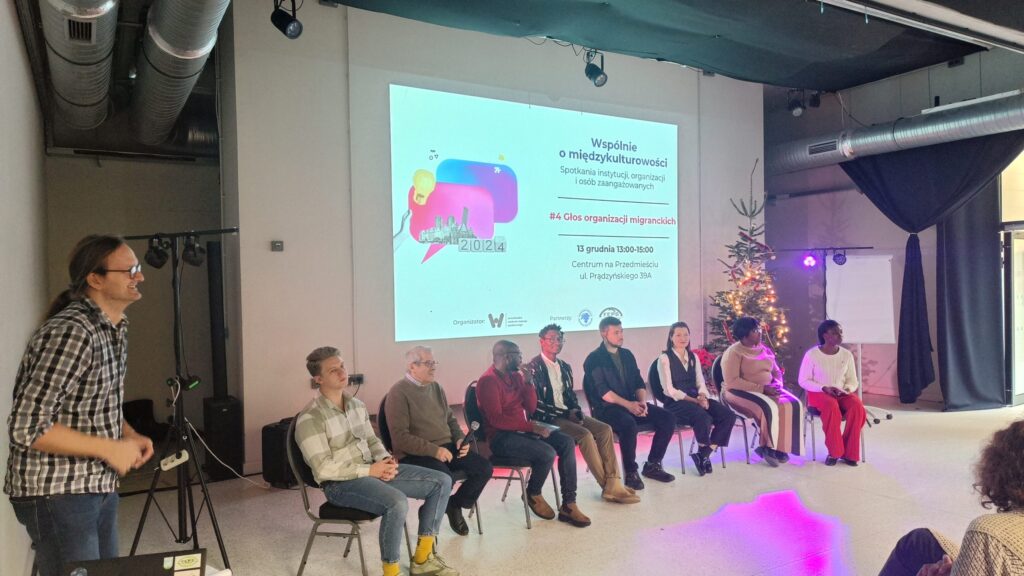
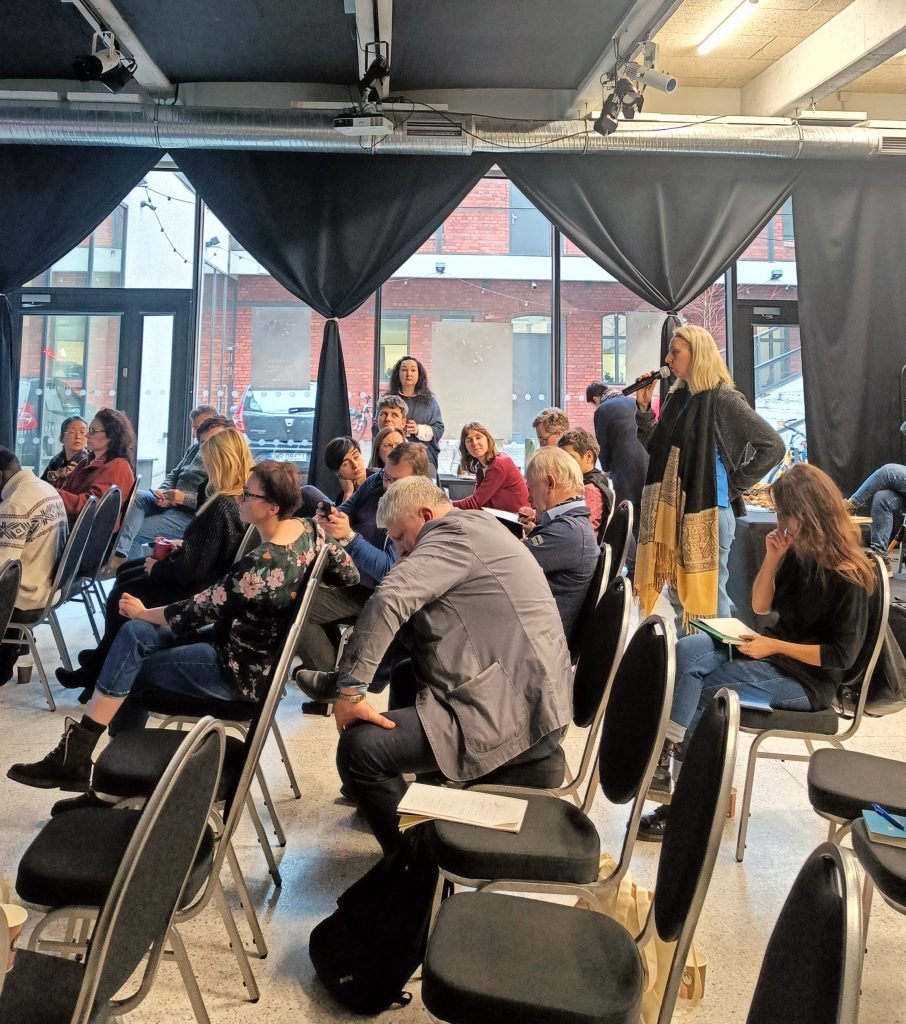
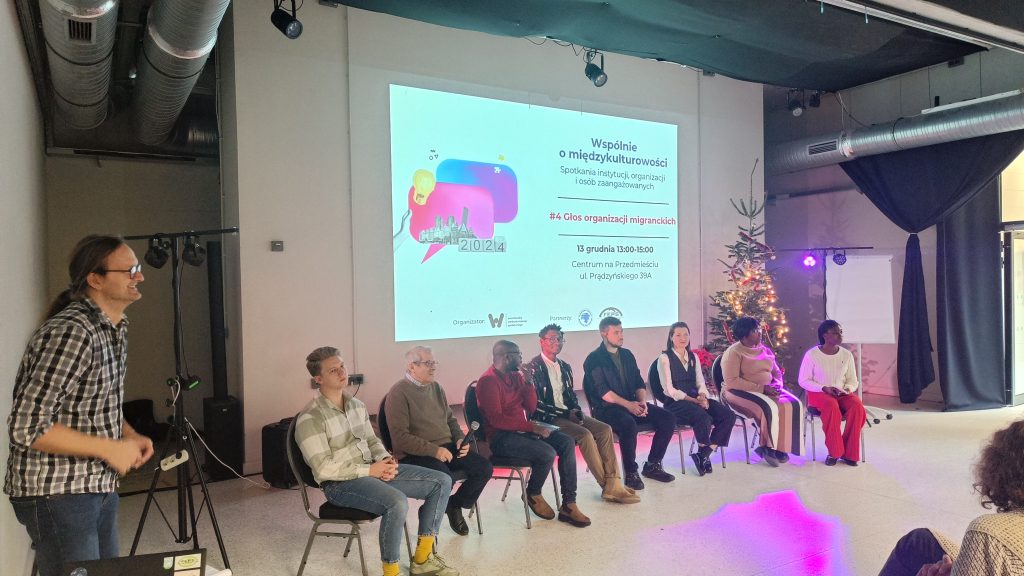
This was the last networking meeting of the year in the “Together on Interculturality” series – and a very fruitful one. On 13 December, representatives of Wrocław migrant organisations working for their communities and for intercultural dialogue in Wrocław talked about their activities, challenges, needs and plans.
After two online editions, we met in person. At the Centrum na Przedmieściu Local Activity Centre (CAL), the floor was taken by migrant organisations and by activists working for communities from Nigeria, Cameroon, Ukraine and Arab countries.
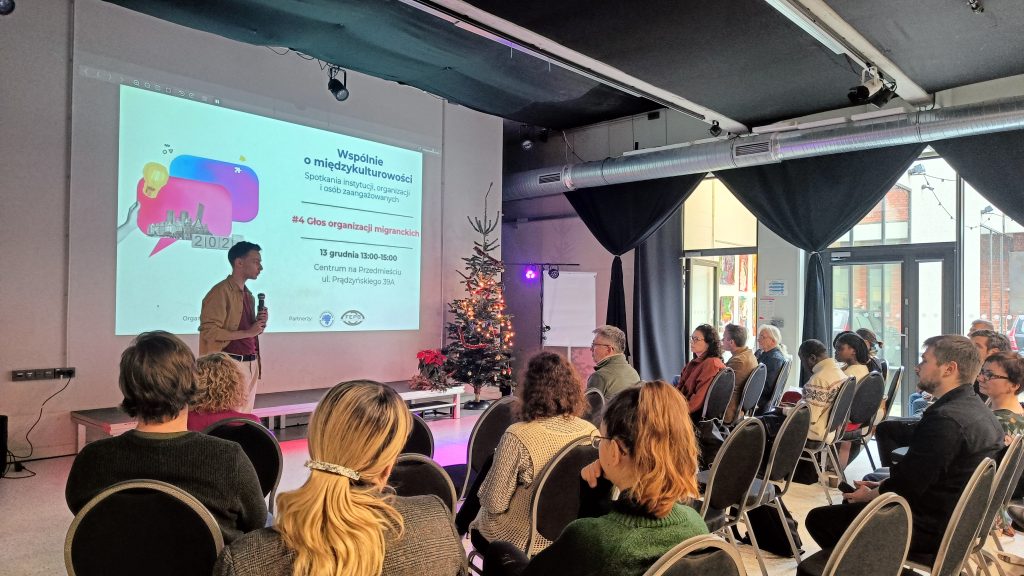
Participants were welcomed by Deputy Mayor of Wrocław Bartłomiej Ciążyński: – We talk about Wrocław as a city that should include and integrate newcomers. They make up 25% of the city’s residents, which also brings a great many challenges – not problems, but challenges that we are working on together with non-governmental organisations. The multiculturalism of the City of Meetings gives us strength, and it is the driving force behind Wrocław’s development, he said.
Speeches were also given by Jacek Pluta, Deputy Director of the Social Affairs Department of Wrocław City Hall; Marta Majchrzak, Deputy Director for Cross-Sectoral Projects at the Wrocław Centre for Social Development; and Maria Mika, President of DFOP. Representatives of DFOP talked about the activities of Centrum na Przedmieściu.
Young foundations, diverse challenges
The organisations presenting their work at the meeting were mainly young ones that have started operating in recent years and have been taken under the wing of Fundacja “Umbrella”. Their emergence is, among other things, a result of Russia’s full-scale aggression against Ukraine and the arrival in Poland of a large number of migrants, not only of Ukrainian origin.
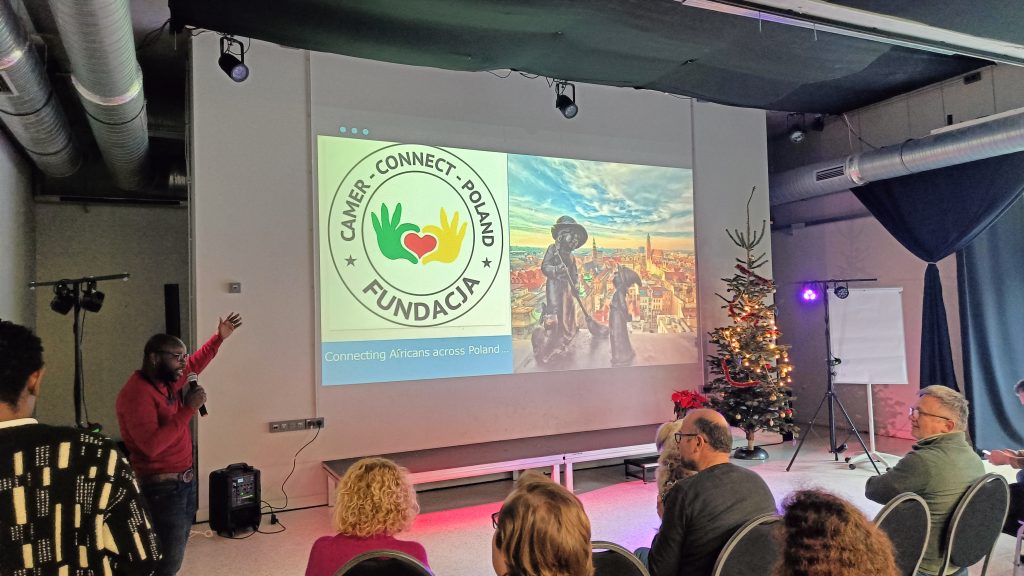
Those who shared their experiences included: Leopold Bienvenu Tegueu (Camer – Connect – Poland), Julia Bogusławska (Ukrainka w Polsce), Serhii Zhovtonozhenko (Fundacja UANITED), Eliza Szul and Debora Mojisola (Fundacja R.E.M.A) and Sufian Kayyal (Wrocławska Fundacja Współpracy z Krajami Arabskimi Marhaba Bolanda).
Support, contacts and networking, funding and sometimes premises for their activities – these are the needs of the organisations that presented their work at the meeting. Those representing migrants’ needs spoke about obstacles, especially in dealing with official matters, such as the language barrier or the lengthy procedures for legalising residence and other formalities. All of them also stressed that they are looking to the new government for solutions to the challenges it faces. Migration policy and procedures all depend on the authorities at the regional (voivodeship) or central government level.
Discussion and priorities for action
The meeting was also attended by representatives of many organisations and institutions, including Fundacja Ukraina, Fundacja PTACH, WCRS WroMigrant – the municipal information point for migrants and refugees, Stowarzyszenie Nomada, Kultura Równości, Regionalne Centrum Wspierania Inicjatyw Pozarządowych, Centrum Praw Kobiet and many others. The discussion covered challenges such as the scale of peer conflicts and manifestations of discrimination among schoolchildren and young people, the exclusion of older migrants, education, and barriers to the participation of migrant groups.
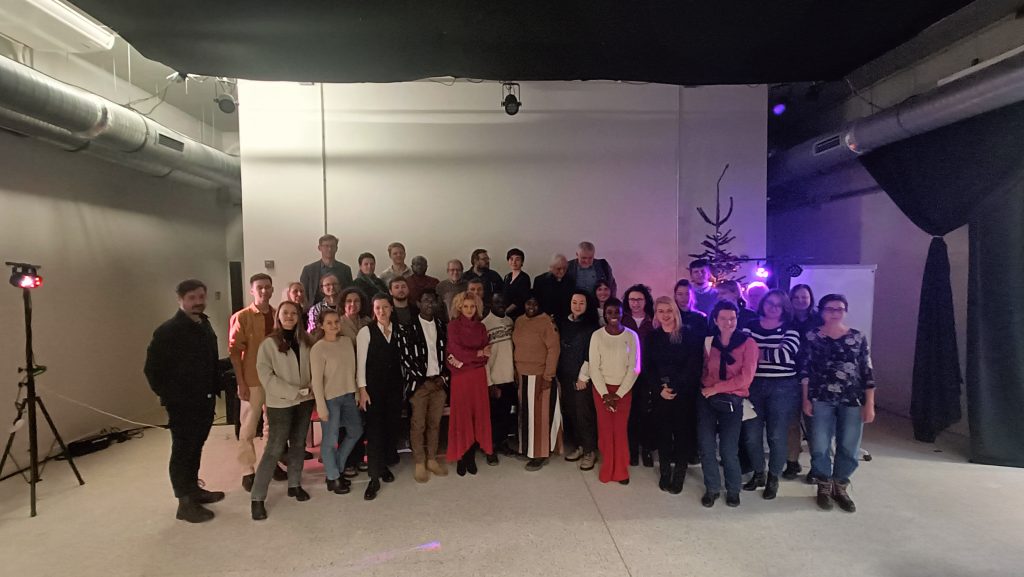
Later in the meeting, there was time to get to know one another and exchange contacts.
The December meeting at Centrum na Przedmieściu was the fourth and final one in 2023 – the series continues in 2024. We would like to thank all participants for their presence, commitment and contribution to the discussions.
Help shape the “Together on Interculturality” series in 2024
You can share your opinion on the “Together on Interculturality” series, including topics and directions for activities in 2024, using the online form until the end of December 2023.
Notes from the meeting on 13 December
The meeting notes are available here: Notes from the meeting on 13 December
The meeting is organised by the Wrocław Centre for Social Development in cooperation with the Foundation for European Progressive Studies (FEPS) and Dolnośląska Federacja Organizacji Pozarządowych (DFOP).