At the beginning of 2026, the WroMigrant Information Point team summarised its activities in 2025. The number of consultations and training sessions delivered, together with the profile of its clients, shows the scale of the support our Point provided to migrants and refugees in Wrocław.
Data on individual support came from forms completed after each consultation. The team also compiled statistics after events organised both independently by the Wrocław Centre for Social Development (WCRS) and in cooperation with partner organisations, as well as statistics on legal and psychological consultations.
In 2025, the main tasks of the WroMigrant team were providing free information consultations, organising training sessions and information meetings, and arranging legal and psychological consultations for people with migration and refugee experience. From April 2025, the Wrocław Centre for Social Development carried out some of its activities under the project “From Adaptation to Integration – support for third-country nationals in the process of intercultural integration in Wrocław” (hereinafter: the “From Adaptation to Integration” project), co-financed by the European Union through the European Social Fund Plus under the European Funds for Lower Silesia 2021-2027 Programme. The project covered, among other things, consultations and events run by the WroMigrant Information Point, as well as other adaptation and integration activities.
Consultation support
In 2025, WroMigrant’s in-person consultations took place at Przejście Dialogu (Passage of Dialogue), a municipal space for meetings and community activities at ul. Świdnicka 19, from Monday to Saturday, 12:00–16:00. At the same time, remote consultations were available every day from 9:00 to 17:00: by telephone (three mobile phones and one landline), by email and via Viber and Messenger.
Consultations were provided in five languages: Polish, Ukrainian, English, Belarusian and Russian.
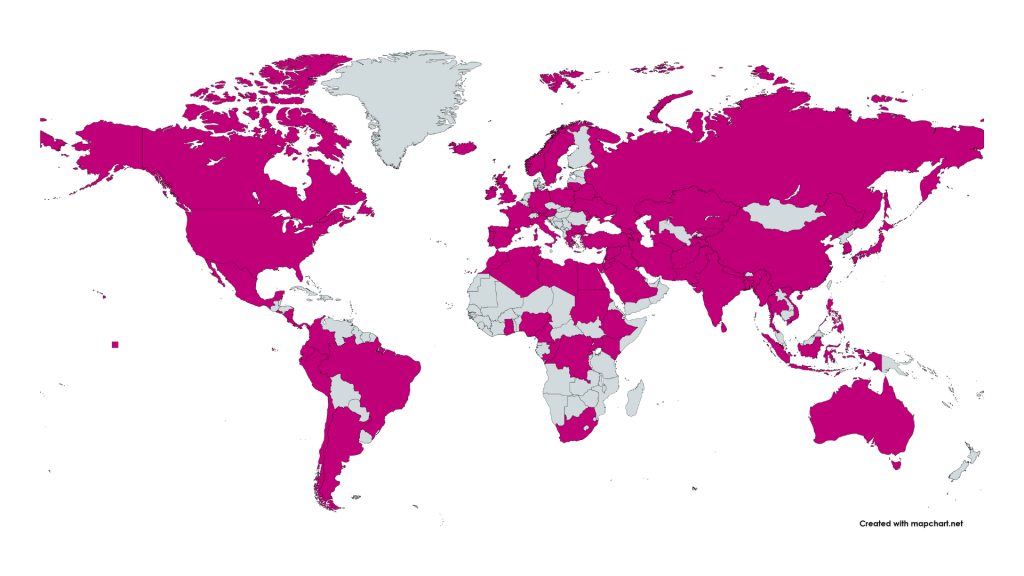
Last year, through consultations and training, our Point reached a total of 7,360 people from 83 countries, as well as stateless persons. We provided 4,155 free individual consultations to 6,542 people, including:
– 2,375 in-person consultations for 3,862 people,
– 1,780 remote consultations for 2,679 people.
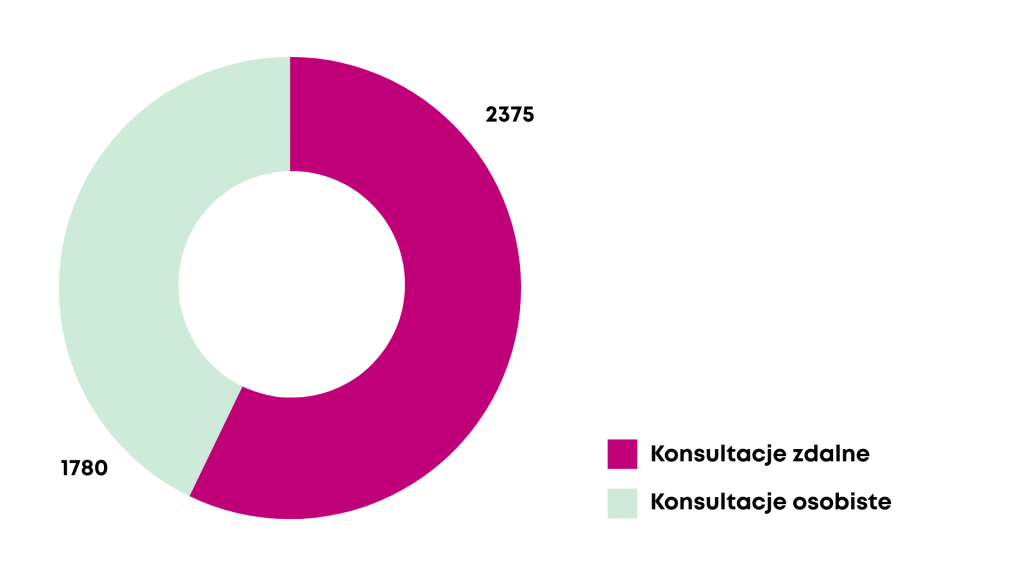
Chart 1. Percentage share of each form of information consultation in the total number of consultations in 2025
Consultations under the “From Adaptation to Integration” project were provided from April to December 2025. The project was addressed to nationals of non-EU countries who could document their legal stay in Poland and their place of residence in Wrocław or in the Lower Silesian Voivodeship. In this period, consultations delivered under the project accounted for 54% of all consultations. The remaining 46% were provided to people who did not qualify for the project.
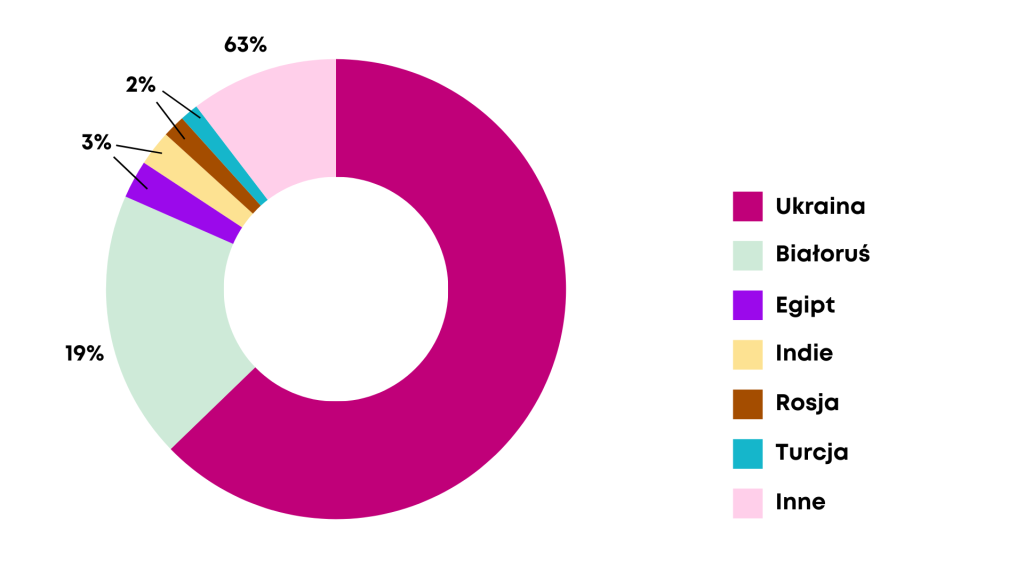
- The largest national groups using the Point’s services were people from Ukraine (63%) and Belarus (19%). They were followed by nationals of Egypt and India (3% each) and Turkey and Russia (2% each).
- 57% of people used WroMigrant’s services for the first time, while 43% visited the Point for the second time or more.
- An analysis of client groups by reason for migration shows that 50% of clients came to Poland fleeing the war in Ukraine, 46% were people with experience of voluntary migration, and 4% were people with refugee experience (within the meaning of the international protection procedure).
The most frequently discussed topics were:
- legalisation of stay and work (26%): completing applications, the list of documents to be submitted to the Voivodeship Office (UW), communication with the UW, waiting times for appointments, preparing for in-person appearances, options for speeding up proceedings, filing complaints and appeals against decisions;
- work (10%): job search, types of contracts, communication with employers, cooperation with employment agencies;
- citizenship (7%): rules for obtaining Polish citizenship, completing the application, the list of documents required, how to submit them to the Voivode, waiting times for a decision;
- legal advice (7%): legal assistance with various matters and documents in countries of origin, and information on where to obtain legal support in Poland;
- border crossing (6%): crossing the border on the basis of extended residence documents, visas, visa-free travel, temporary or international protection status, as well as leaving and re-entering the territory of Poland;
- UKR status (6%): extension of the Act on assistance to Ukrainian citizens, changes to the rules on residence and work in Poland, access to social benefits and National Health Fund (NFZ) services, applying for a residence card or international protection, and border crossing by persons with temporary protection status in Poland;
- social assistance (6%): help with official matters, in particular completing applications and drafting general letters to the Social Insurance Institution (ZUS) and the Municipal Social Assistance Centre (MOPS), clarifying cases where benefit decisions were withdrawn in error, as well as summonses and other notices related to social benefits.
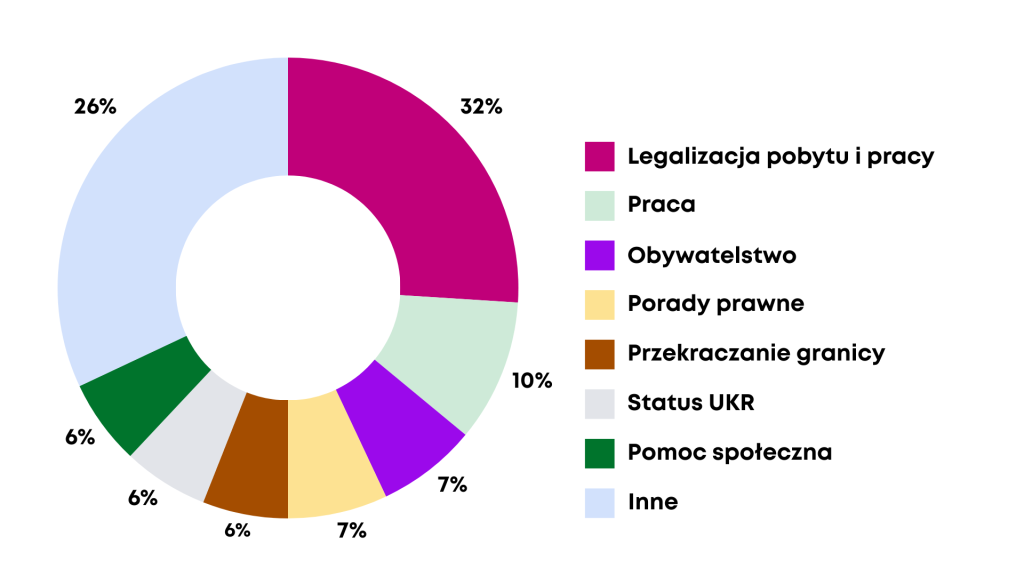
Chart 3. Percentage share of the most frequently discussed consultation topics in the total number of consultations in 2025
Training and information meetings
In 2025, WroMigrant coordinated legal consultations and individual psychological consultations for migrants and refugees. A total of 306 legal consultations were provided at Przejście Dialogu. Psychologists conducted 237 individual consultations, 144 of them in Ukrainian or Russian and 93 in Polish or English.
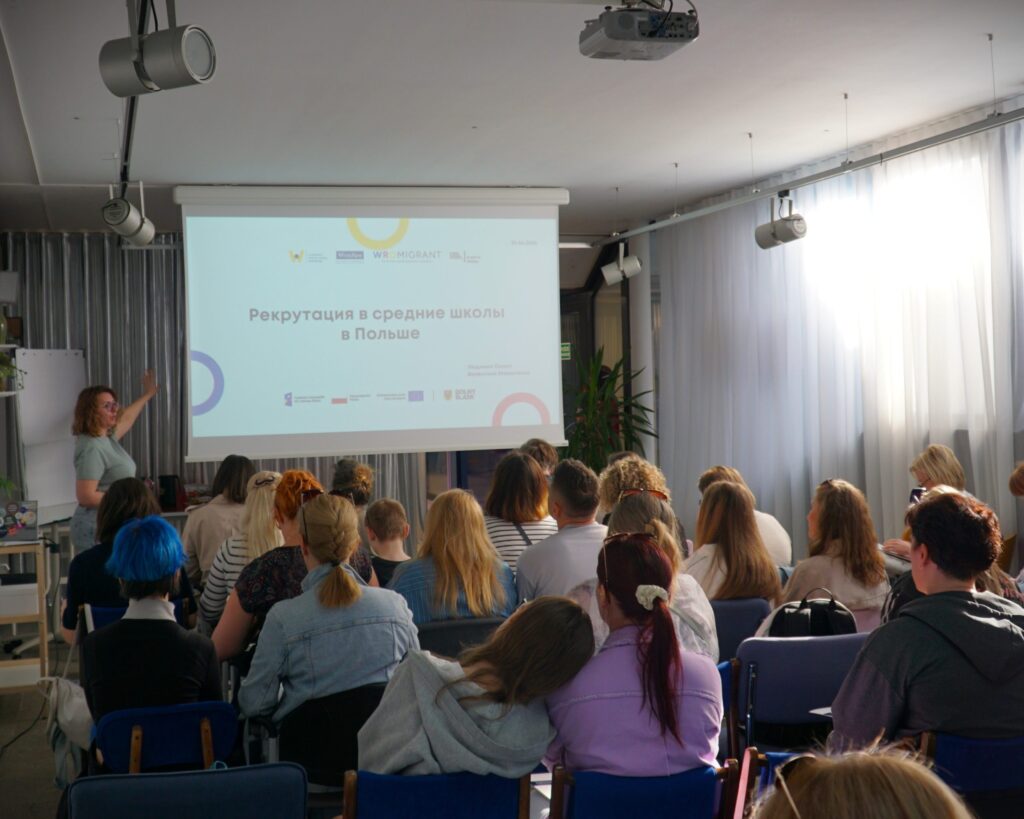
In 2025, WroMigrant organised 71 information and integration meetings for people with migration and refugee experience, attended by around 1,000 people. Among the regular events, art therapy meetings for women (260 participants) and information meetings on school admissions and education in primary and secondary schools (62 participants) proved particularly popular.
Among the events organised by partner organisations, the most popular were training sessions on PIT (personal income tax) returns, run by specialists from the Tax Administration Chamber. They were attended by 53 participants. Last year, cooperation with the Wrocław Institute of Culture under the Mikrogranty (Microgrants) project continued. Two training sessions and two consultation sessions were held, attended by around 40 people. During the meetings, WroMigrant consultants provided participants with interpreting support. In addition, consultations and training sessions organised in partnership with the Voivodeship Labour Office (WUP) in Wrocław were held. The meetings took place monthly; over the year, WUP experts delivered 6 training sessions on navigating the labour market and 6 individual career guidance sessions for more than 100 people.
In 2025, WroMigrant consultants delivered 33 training sessions for almost 400 people. The training offer can be divided into general topics offered on a regular basis and topics delivered for the first time this year.
The regular, recurring training sessions covered the following topics in various language versions:
- Single permit for temporary residence and work (in Ukrainian, Russian and English)
- Residence for the purpose of studies (in English)
- EU long-term resident status (in Ukrainian and Russian)
- Everyday life in Polish schools (in Ukrainian and Russian)
- Certification of Polish as a foreign language (in Ukrainian, Belarusian, Russian and English)
The topics of WroMigrant training sessions are based on the questions most frequently asked during consultations and on changes in the law concerning foreigners in Poland. The consultants analyse the current needs of Wrocław’s new residents and then address them in the presentations, training sessions and meetings they prepare.
Last year, WroMigrant’s offer was expanded to include 8 new topics:
- Visiting a doctor in Poland (PL, UA, RU, BY): an information session guiding participants through the Polish healthcare system, covering medical help at weekends, on public holidays and at night, the Internet Patient Account and e-prescriptions, and aimed at helping participants use medical services independently and with confidence. The training also included a workshop to practise the most useful medical vocabulary.
- Secondary school admissions (UA, RU): a meeting on the rules and deadlines for admission to secondary schools, the electronic admissions system and the range of schools in Wrocław.
- Polish travel document (BY): an information meeting on applying for a Polish travel document for foreigners who are unable to obtain one in their country of origin. The meeting covered the situations in which the document can be applied for, how to complete the application and the list of documents required to obtain it.
- Get to know Wrocław City Hall (PL, UA, BY): an information meeting on local government in Poland, how it works, its structure and opportunities to get involved in city life through various municipal projects, combined with a tour of the Town Hall with an experienced guide.
- E-services in Poland (UA): training on online portals and e-services available in Poland, such as mObywatel, podatki.gov.pl, the Internet Patient Account and others. The training was designed with older people in mind, to make it easier for them to use online public services.
- A visit to Pan Tadeusz (PL, UA, RU): a study visit including a tour of the Pan Tadeusz Museum with a Ukrainian-speaking guide, devoted to Adam Mickiewicz’s poetic vision of the world.
- UKR status: what next? (with Ukrainian Sign Language interpreting) (UA): training on changes to the act governing UKR status and on options for legalising stay after temporary protection in Poland ends. The meeting was adapted to the needs of people with hearing impairments, with Ukrainian Sign Language interpreting provided.
- Holiday craft workshops (PL, UA, RU, BY): the workshops “Easter Palms”, “Original Polish Christmas Tree Decorations”, “Traditional Straw Pająk (Hanging Ornament)” and “Let the First Star Shine” offered an immersion in traditional Polish and Slavic festive culture. Participants made their own festive decorations and learned about the history, culture and holiday traditions of Poland and its neighbouring countries.
About the WroMigrant Information Point
WroMigrant, the municipal information point for migrants and refugees, is a programme of the Wrocław Centre for Social Development, established in Wrocław in 2013 (operating as Infolink until 2020).
WroMigrant is a place where migrants and refugees can obtain free information on legalisation of stay and work, international protection, official matters (registration of residence, PESEL number, driving licence, vehicle registration, PIT returns, social assistance, etc.) and everyday matters (education, healthcare, learning Polish and more). Consultants also advise on how to make use of Wrocław’s social and cultural offer, how to look after one’s mental health, and where to spend time enjoyably in artistic or integration activities. WroMigrant also acts as a link between municipal institutions, non-governmental organisations and migrant communities.
More information about the WroMigrant team’s activities can be found on the programme website.
The project “From Adaptation to Integration – support for third-country nationals in the process of intercultural integration in Wrocław” is co-financed by the European Union through the European Social Fund Plus under the European Funds for Lower Silesia 2021-2027 Programme and from the state budget under grant agreement No. FEDS.07.06-IP.02-0050/24-00 of 14.02.2025.
Project beneficiary: Wrocław Municipality